

Why Belief Has to Come Before Skills | with Gabe Amey
Part 4 of 5: The Origin of RiseHI
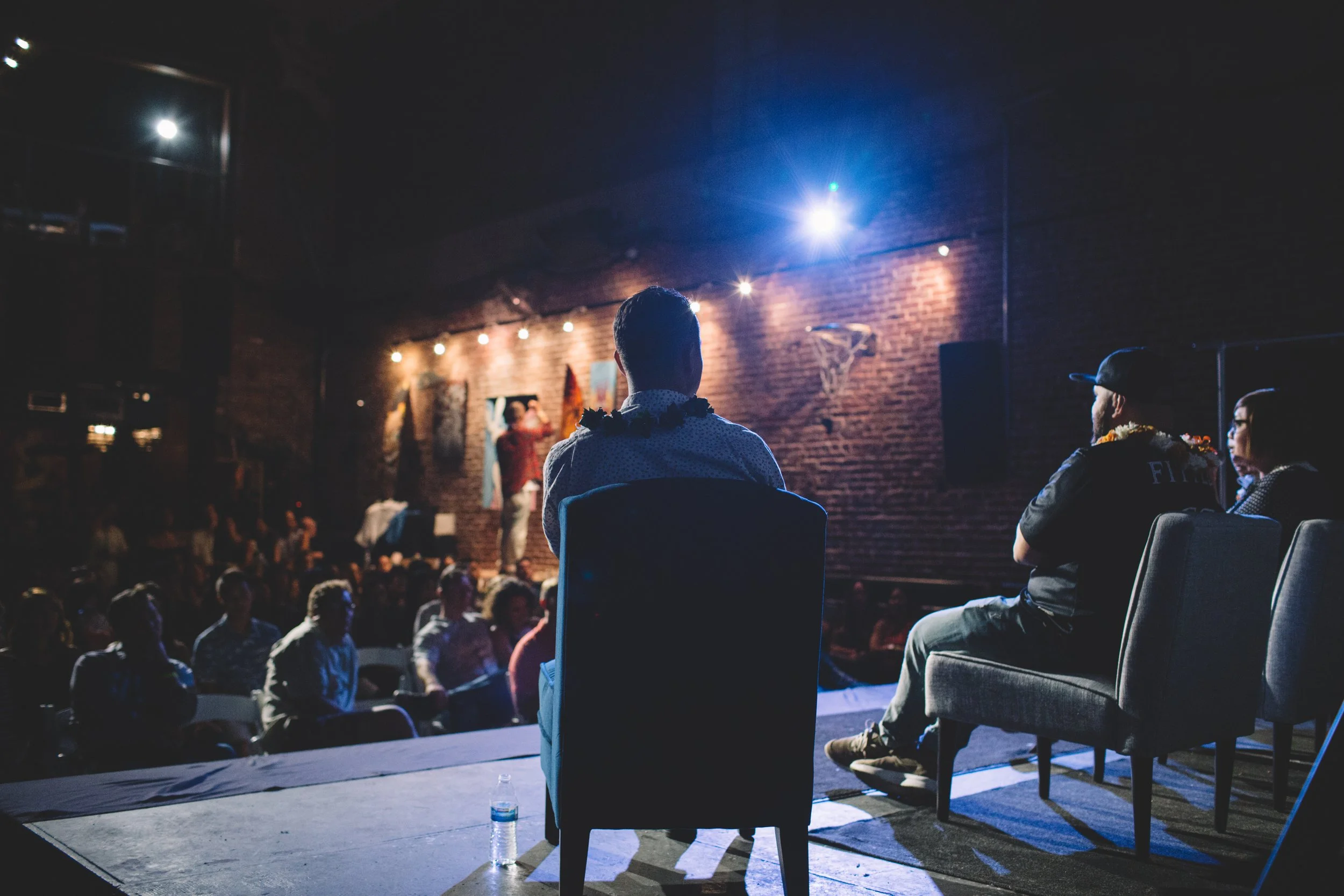
RiseHI launch event May 2016
The Story
What does a kid do when the story everyone keeps telling about home is that there’s no future in it?
I came home to Hawaiʻi in 2005 a different person than I had been when I left. The kid who had spent two years inside the Menlo College bubble had spent four more years across the South. He had figured out, the hard way, that the audience he was afraid of was never really watching, and that the people he had assumed were built different were not. He came home with a confidence he had never had at 18.
What that confidence looked like, in practice, was that I started taking swings I would not have taken before. I got into the mortgage industry because a friend was in it and I knew I could hustle. Three years later, I had an idea everyone around me thought was crazy: a mortgage company that specialized only in VA loans, for veterans. My stepfather, who raised me, was a Korean War veteran who had never been told what his benefits were. I knew the process was opaque, that veterans were getting bad guidance, and that if we built one place where the benefits and the process lived together, veterans would come.
I started Hawaiʻi VA Loans in 2007. The 2008 financial crisis arrived right on its heels. Our first child arrived right after that. It was a burn-the-ships moment, and somehow it worked. What that decade taught me, more than anything, was that an idea you feel strongly about can become a real thing in the world. You can build it from nothing. You can support a family on something that did not exist before you decided to make it.
Then, around 2011 or 2012, I started noticing something that bothered me.
The narrative around me, about my own home, had gotten loud and dark. Hawaiʻi was the worst place to do business. Hawaiʻi was the most expensive place to live. Hawaiʻi was where families went broke or watched their kids leave. The numbers backed parts of this up. The Aloha United Way ALICE Report found that 45% of households in Hawaiʻi struggle to afford basic necessities, and 37% have seriously considered leaving the state. The pressure was real.
But the part that worried me was not the economics. It was the curriculum. Every kid in Hawaiʻi was growing up inside this story. They were watching their parents work two jobs. They were watching cousins move to Vegas. They were absorbing, every single day, the message that the only path to a good life ran through the airport. I had been that kid. I knew exactly what happened to a brain that grew up in that programming. If the story you keep hearing is that there is no future for you here, and you believe it, you stop trying. You stop looking. You stop seeing the opportunities sitting right in front of you, because you have decided in advance they cannot be yours.
The question I could not stop asking was this: what does Hawaiʻi look like in 20 or 30 years if every kid raised here grows up believing they have to leave? Who carries the culture? Who carries the language? Who carries the way we treat each other? What is the fabric of this place if there are more transplants than people who grew up here? I did not have an answer. But I knew the narrative had to change.
I already knew exactly what to call this mission: RiseHI.
So in 2016, I called my friend Kolby Moser. Kolby ran a wedding videography company at the time. I asked her to help me film interviews with kamaʻāina who had built meaningful lives and careers right here. Not transplants. Not celebrities. People who had grown up in our neighborhoods and gone to our schools and figured out how to make something. We asked every one of them the same questions. What was your childhood like? What inspired you? What were the obstacles? How did you keep going? We sat down with Keola Rapozo of FITTED Hawaii. Kahi Pacarro of Sustainable Coastlines Hawaiʻi. Meli James of Mana Up. Shar Tuiʻasoa, who you might know as Punky Aloha. Zak Noyle. Tiana Gamble of Bikini Bird. The list kept growing. Eventually, it reached 36 people.
What I found across every interview shocked me. The same themes kept showing up. Overcoming fear. Being proactive instead of reactive. Thinking outside the box. Showing up again and again when no one was watching. It did not matter if the person was a chef or a non-profit founder or an artist or an entrepreneur. The pattern was the same.
That was the aha. These were not just stories. They were patterns. Codifiable, repeatable lessons that kept surfacing because they were how people actually built lives here. Why weren't these being taught in our schools? They needed to be."
So we built it. We turned the interviews into short video case studies and added animation to make them land for students used to growing up on screens. We wrote workbooks. We built lesson plans for teachers. We started with eight modules, each focused on one foundational lesson: visualize your future, overcome your fears, vulnerability creates opportunity, take action, think outside the box, small steps lead to big outcomes, level up, and perseverance to see it through. (Four more are in development now.) We called it Make IT Happen.
Take Module 3, Vulnerability Creates Opportunity. One of the kamaʻāina featured in it is Keola Rapozo, a local boy and Castle High School graduate from Kahaluʻu. When Keola enrolled in a fashion design class at Honolulu Community College, the class only made women’s garments. His friends teased him relentlessly. He kept going, because he knew that if he could learn to make women’s clothing, he could learn to make men’s. When most people his age would’ve quit from the criticism, he stuck it out. He had the courage to look foolish to people who knew him because he had a vision. He went on to co-found FITTED Hawaii, one of the most beloved local apparel brands in the state. That is the kind of story a thirteen-year-old in Hawaiʻi has never been told about themselves before.
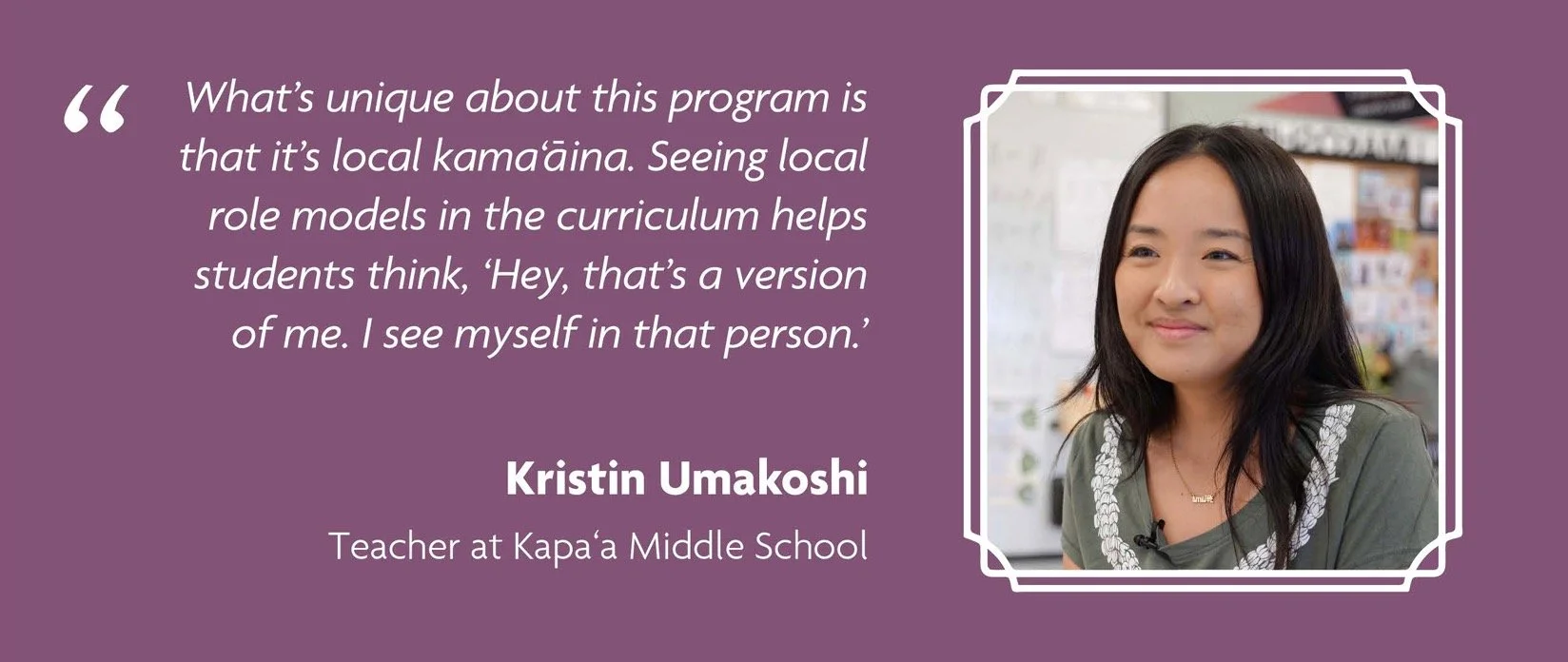
When I moved back to Hawaiʻi in 2005, the cap I had been carrying since reading, “No shipping to Hawaiʻi” in the catalog on my bedroom floor was gone.
There is a name in psychology for the quieter of those two realizations. It is the one that did the most work to dismantle the cap.
The insight
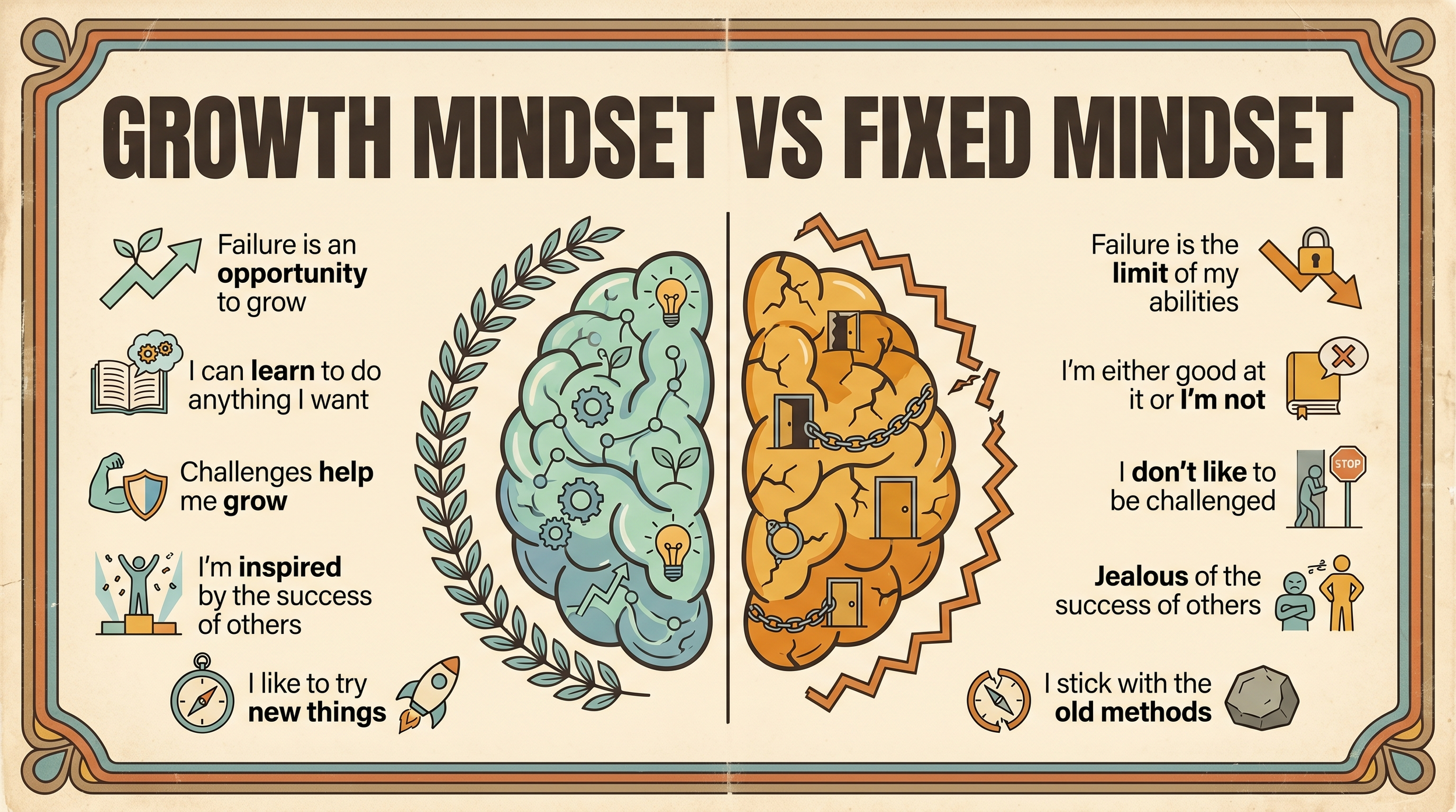
In 2006, a Stanford psychologist named Carol Dweck published a book called Mindset that crystallized two decades of her research. She found that people fall, roughly, into two camps. Some people believe their abilities are essentially fixed. You are smart or you are not. You are athletic or you are not. You can do this kind of work or you cannot. Other people believe their abilities can grow. They start with what they have and trust that effort, feedback, and time will move them forward.
The first group is what Dweck calls a fixed mindset. The second group is a growth mindset.
The cost of a fixed mindset is enormous. People with a fixed mindset avoid challenges, because failure feels like a verdict on who they are. They give up when things get hard, because struggle proves they were never good enough in the first place. They live a smaller life than the one they are capable of, not because they lack ability, but because they have been quietly trained to protect a story about themselves.
That is what was happening, and is still happening, to a generation of kids growing up in Hawaiʻi. The narrative around them has told them, every day, that what is possible for them is fixed by where they were born. The way to break that is not a motivational poster. The way to break it is to show them, again and again, real people from their own neighborhoods who built lives here despite the same obstacles. People they can look at and recognize. People who give them permission to believe what they had never been allowed to believe before: that they can grow.
Belief is the soil. Everything else we try to teach has to grow in it.
the application
We have spent decades building education systems that treat technical skills as the destination. Math. Reading. Science. Test scores. These matter. No one is arguing they don't.
But somewhere along the way we forgot to ask the prior question. Does the kid sitting in this classroom believe they are the kind of person who gets to use these skills?
If the answer is no, no amount of technical training will close the gap. You can teach a child to code, but if they have absorbed a story that says people from their neighborhood don't become engineers, the skill will sit unused on a shelf in their head. You can teach them to write, but if they do not believe their voice belongs in a room, the writing never leaves the page.
This is the disservice we keep doing to our keiki. We rush to stack technical skills on a foundation we never bothered to build.
Hawaiʻi is full of kamaʻāina who came from nothing. Who carried fears, insecurities, and doubts. Who navigated the same systems and stories our students are navigating right now. They did not get where they are because someone handed them a perfect skill set at sixteen. They got there because, somewhere along the way, they began to believe they could.
The skills came after.
That is the foundation our schools need to start with. Not instead of skills. Before them.
What We Can Steal
Belief is the foundation. Skills are the structure.
Technical skills matter, but they cannot hold weight on a broken foundation. A child who does not believe the skills are theirs to use will leave them on the table.The hardest lessons to teach are the ones that look like a feeling.
Resilience, vulnerability, proactivity, courage. These cannot be lectured into a student. They are caught, not taught, by watching real people who have lived them.Relatable proof is the most powerful curriculum we have.
A motivational poster cannot do what a real kamaʻāina from a real neighborhood does in five minutes of video. Our keiki do not need bigger ideas. They need closer ones.Programs like Make IT Happen belong in every Hawaiʻi school.
Our keiki are not failing because they cannot learn. They are quietly opting out because they have not been given a reason to believe the system is for them. That is the problem we have to solve first.
Next week, in Part 5, the second program. Belief opens the door. But a kid who believes they can still needs to see what’s actually on the other side. The careers. The paths. The people already doing the work, right here, right now.
Missed an earlier issue? Read Part 1, Part 2, and Part 3 on our blog.
Mahalo for reading this week’s Mana‘o Bomb.
Next week, we’ll drop another idea from Hawai‘i. A story that sparks growth, resilience, and purpose.
For those who build what they wish existed.