

Why I Almost Became an Engineer for No Reason | with Gabe Amey
Part 5 of 5: The Origin of RiseHI
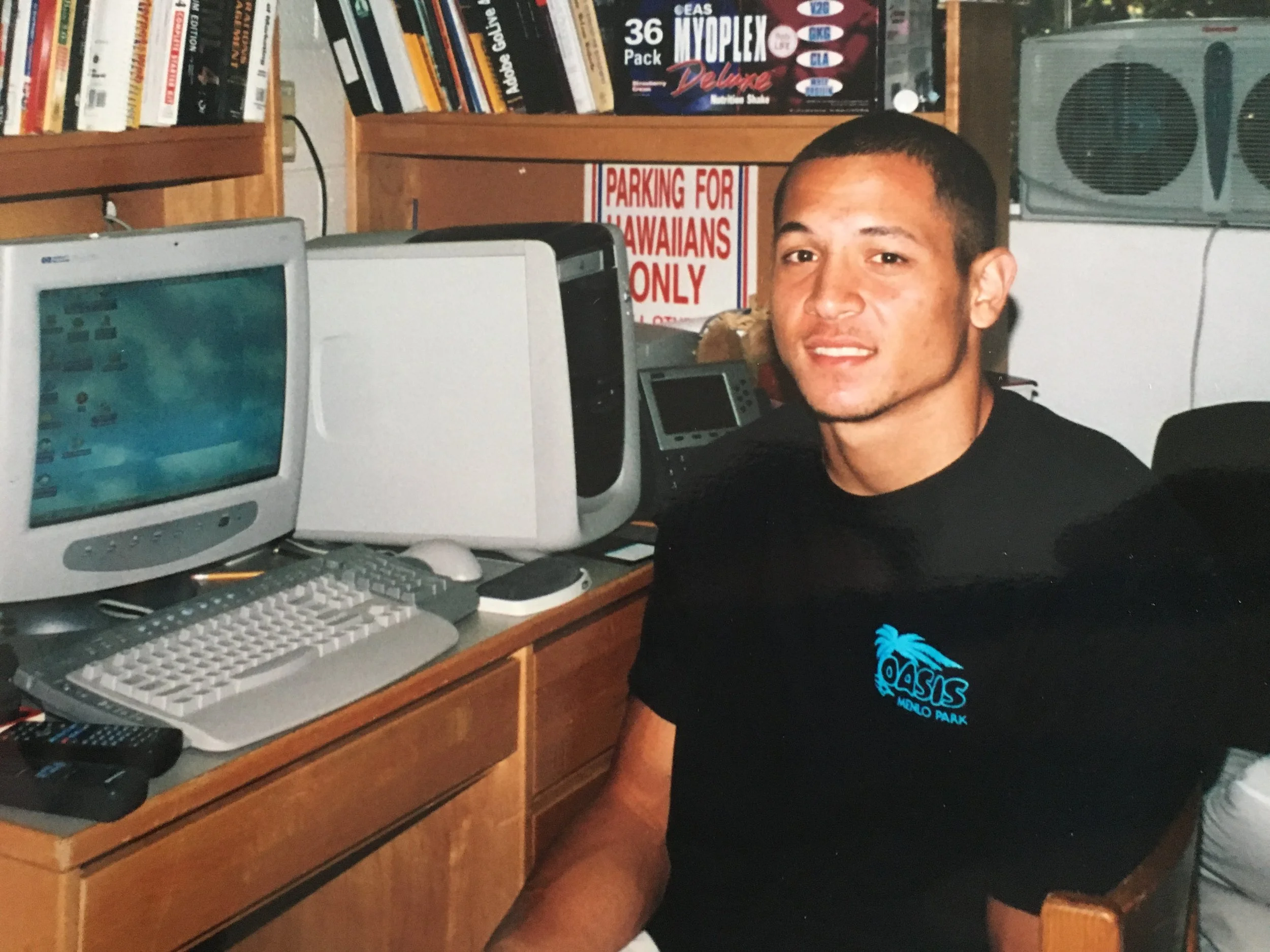
Freshman year in college ~ 1997
The Story
What if the future you would have loved was hiding inside a job you had never heard of?
When I was 17, I almost picked engineering as my college major.
I did not know what an engineer did. I could not have told you the difference between a civil engineer, a mechanical engineer, or an environmental engineer. I just knew the word “engineer” sounded smart. I had heard engineers made good money. The label sounded important. That was, more or less, the entire foundation underneath a decision that would have shaped the rest of my life.
I am not picking on my seventeen-year-old self. I am pointing at something almost every kid I know does in some version. We choose futures from the menu we have been handed. We pick from what we have seen. The kid raised in a family of teachers becomes a teacher. The kid whose dad and uncles work at Pearl Harbor applies to work at the Shipyard. We mistake our reference frame for the world. In Hawaiʻi, where so many of our communities are small and rural and family-rooted, that reference frame is often tiny. And the cost of choosing your future from a tiny menu is the rest of your life.
Once Make IT Happen was being piloted out across schools, I started spending a lot of time in conversations with school administrators. I was there to ask what was working and what wasn’t. But the same theme kept coming back, unprompted, from principals and counselors across the state. They were telling me there was a gap they could not close. Their kids did not know what was out there for them. The Career and Technical Education (CTE) resources schools relied on for career exploration were thin and dated.
So I went and looked at what schools were actually doing for career exploration. The answer, more or less, was the same thing schools have been doing for decades: the career fair.
A local professional drives out to the school, sets up at a folding table next to the cafeteria, and spends an hour telling thirty kids what they do for a living. A firefighter. An attorney. A nurse. The students walk past, listen for a few minutes, take a sticker, and walk on. There is nothing wrong with career fairs. There is also no version of them that solves this problem.
Three reasons. One, a professional can describe what they do, but a kid cannot see it. There is a real difference between hearing someone say “I’m an ocean engineer” and watching that engineer spend a morning calibrating instruments on a research vessel. Two, schools are limited to the professionals who are in their contact list and can take a day off work. Most can’t. Three, none of it is evergreen. Once the fair is over, the information walks back out the door.
We are sitting on more storytelling technology than humanity has ever had. There had to be a better way.
So we decided to flip the model. Instead of asking professionals to come to the schools, we send a production crew to visit the professional.
We spend the day with a pharmacy technician. We spend a morning with an ocean engineer. We follow a general contractor from a job site to a permit office. Our crew documents what the day actually looks like. Then we sit the professional down and ask the questions a student actually wants to know. What does your typical day look like? How did you get here? What are the real opportunities in your field? What are the challenges? What kind of person does this work well? Where do you find purpose in this?
We turn each visit into a course. The course gets a workbook. The workbook gets paired with the video. Both get distributed to schools across Hawaiʻi for the cost of a license, so every keiki, regardless of geography or income, has access to the same window onto what’s possible. We call it ʻOihana Career Explorations.
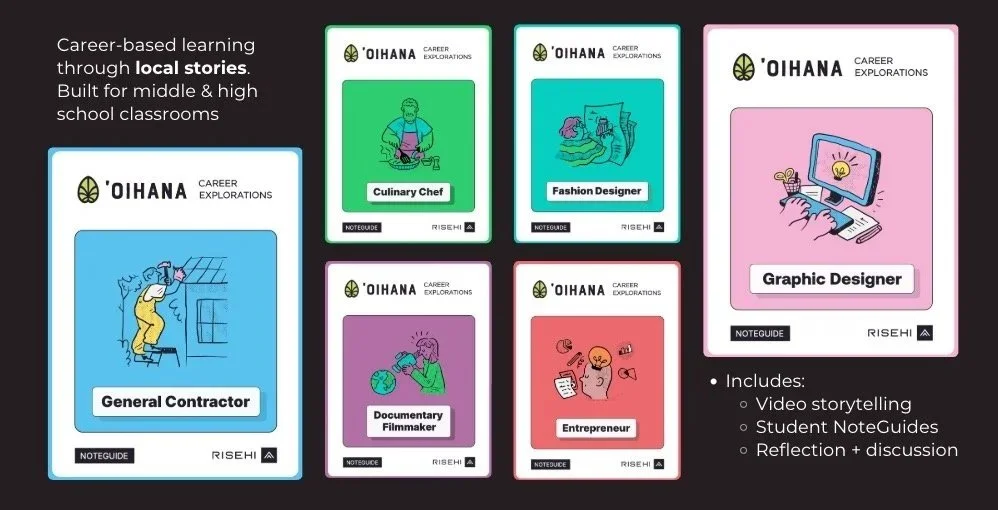
Our vision is 80 courses by the end of 2027, aligned with the Hawaiʻi Department of Education’s thirteen career pathways. By 2030, our goal is 20,000 students using the platform annually.
But the deeper point of the program is not the number of courses or the number of students. The deeper point is that a thirteen-year-old in Honoka‘a should have the same access to imagining herself as a marine biologist, or a documentary filmmaker, or an entrepreneur, as a kid in Manoa. Where she was born should not determine what she can picture. Right now, it does.
And there is one more reason ʻOihana matters that nobody talks about: ruling things out. Half the value of seeing what a career actually looks like is realizing the ones that are not for you. A kid who watches a course about being a pharmacist and decides, with relief, “that is not me,” has been given a real gift. They are not going to spend six to eight years in school chasing a future that was never going to fit them.
Make IT Happen builds the belief that you get to want a future. ʻOihana shows you the futures available to want. Together, they are the two halves of the work.
There is a name in psychology for why the second half is just as important as the first.
The insight
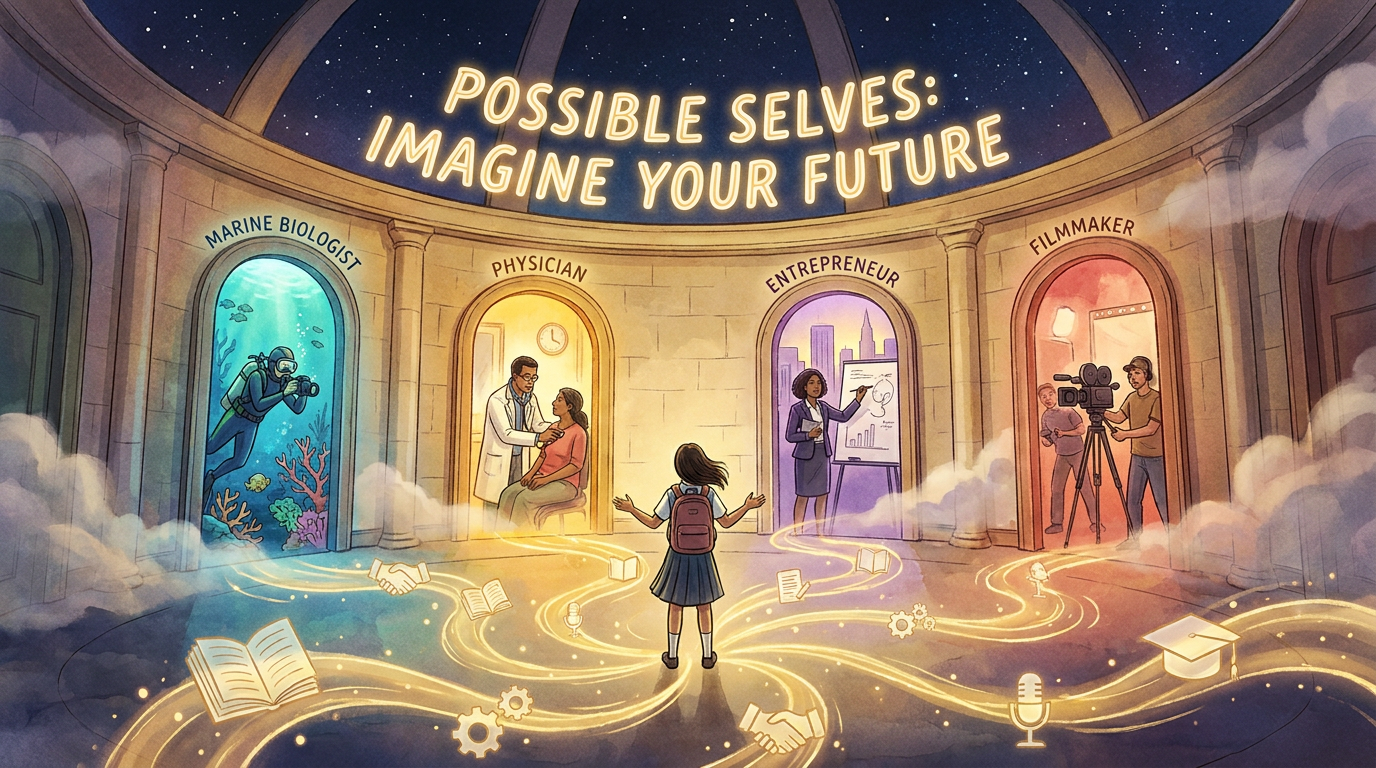
In 1986, two psychologists at the University of Michigan, Hazel Markus and Paula Nurius, introduced a concept that has reshaped how we think about motivation. They called it Possible Selves Theory.
The idea is straightforward. Each of us carries around, in our heads, a collection of possible selves. Versions of who we might become. Some are hoped for. Some are feared. All of them are imagined.
What Markus and Nurius found is that these possible selves are not just daydreams. They are the engine of motivation. The clearer and more specific a possible self is in your head, the more it drives your behavior. A vague possible self (“a successful adult”) doesn’t pull you toward anything in particular. A vivid, specific possible self (a coral reef researcher at Hawai‘i Institute of Marine Biology) pulls you toward specific classes, specific summer programs, specific mentors, specific habits.
A kid who can vividly imagine themselves in a future is a kid who can work toward it.
This is why my seventeen-year-old engineer fantasy was so empty. I was not actually picturing being an engineer. I was picturing carrying the label. I had no vivid possible self because I had never seen one. Make IT Happen could have given me all the belief in the world that I could become anything I wanted. It would not have helped me pick that anything from a menu of one fuzzy word.
ʻOihana exists to give our haumāna a menu. Each course is a chance for them to try on a possible self, in detail, and see if it fits.
You cannot become what you cannot picture. Belief opens the door. Vision tells you which room to walk into.
the application
For decades we have asked our schools to do career exposure with the tools of 1985. A volunteer professional. A folding table. An hour. A flyer.
The world that asked these kids to choose a future is not the world of 1985 anymore. The careers have changed. The technology to make those careers visible has changed. The expectations on a student to choose well, and to choose early, have only intensified.
What has not changed enough is the system we hand our keiki for figuring out what to do with the one life they have.
A kid from Kaʻū today should not be making decisions about the next ten years of her life from a menu that consists of the careers her family happens to hold and the professionals her school happens to know. That is not a choice. That is a guess, dressed up as a choice.
We can do better than this. The cost of doing better, in dollars per student, is small. The cost of failing to do better, measured in misallocated futures, is enormous.
Every keiki in Hawaiʻi deserves the chance to discover what they did not know existed, and to rule out what they now know is not for them. That is the work.
What We Can Steal
You can only want what you can see.
Aspiration has prerequisites. Without specific, vivid examples of what’s possible, dreams stay vague, and vague dreams do not drive action.Eliminating a path is as valuable as discovering one.
The biggest gift of a real career exploration program is not the path a kid ends up choosing. It is the false paths they get to rule out before sinking years into them.Where you grow up should not determine what you can imagine.
Every kid deserves access to the same window onto what is possible. Geography is not a destiny, but it has been allowed to function as one for too long.Belief is the floor. Vision is the ceiling.
Programs like Make IT Happen and ʻOihana are not redundant. They are the foundation and the framing of the same house, and every keiki in Hawaiʻi deserves to know they get to live in it.
This series began five weeks ago with a kid on his bedroom floor in Hawaiʻi who had been told, quietly and without explanation, that he didn’t count. We have followed the long road from that moment to here. To Nate Jackson at Menlo. To a locker room in Macon, Georgia. To a phone call to Kolby Moser. To a curriculum built from 36 interviews. To a production crew walking into a working pharmacy at 7 a.m. so a kid in Waiʻanae can spend an hour, in her own classroom, imagining what that life might be like.
Make IT Happen plants belief. ʻOihana opens the aperture. Both exist for the same reason this newsletter has signed off the same way:
For those who build what they wish existed.
Thank you for reading along.