

What I Learned When Nobody Was Watching | with Gabe Amey
Part 3 of 5: The Origin of RiseHI
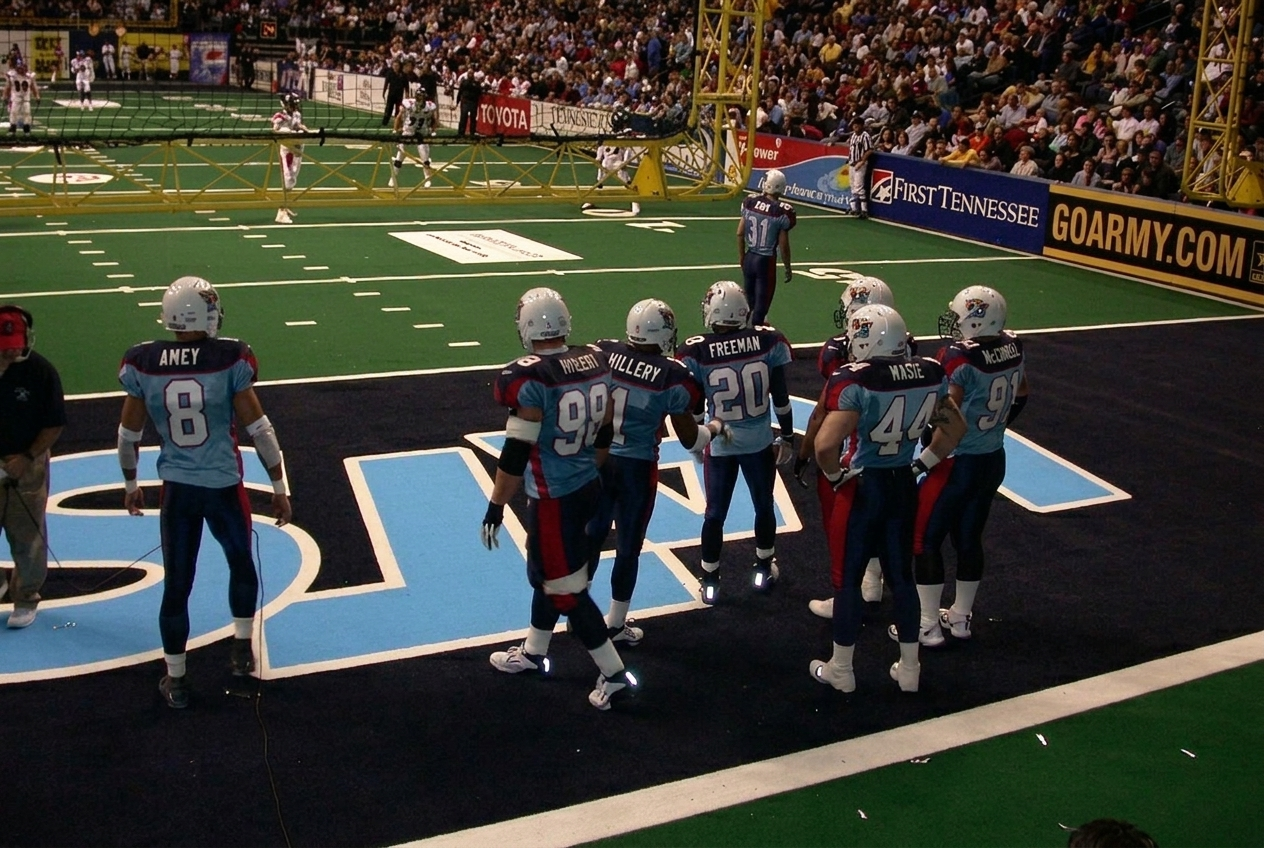
Gabe Amey playing in Arena Football Game in Nashville 2005
The Story
What if the audience you’ve been holding back for was never even watching?
Before Macon. Before Charlotte. Before Nashville. Before the four years I’d spend playing Arena Football across the South, I had a different plan.
It was the fall of 2000. I was a senior at Menlo College, in the heart of Silicon Valley, surrounded by the loudest gold rush of my lifetime. Google was a two-year-old startup founded by two Stanford students operating out of a home garage just a 7-minute drive from my dorm room.
Friends I knew were getting hired into dot-com startups, cashing in stock options, and becoming millionaires before they hit thirty. My plan was simple. Graduate in May. Get into a startup. Cash in stock options. Three or four years later, move back home and buy that house on Kailua Beach.
The dot-com bubble had peaked on March 10, 2000, when the NASDAQ eclipsed the 5,000 mark. One year later, just two months before my graduation, the index hit a new low. It had fallen by more than half. It was obvious we were in a bear market. Internet companies that had been worth billions on paper were suddenly worth nothing. Hiring froze. The valley emptied out. People who had been celebrated as geniuses six months earlier were quietly looking for any job they could find. My trajectory died in a week.
I had no idea what to do. Then I got a phone call from Fred Giudici, one of my coaches at Menlo. He had a connection to the Macon Knights, a professional Arena Football team. Arena Football is the indoor version of the game, played on turf inside a basketball arena. They were midway through their season, and they needed a tall receiver. Was I interested?
Two weeks after graduation, I was on a plane from California to Atlanta, Georgia. For the first time in my life, I was going to get paid to play a sport I loved. Not a lot. But for a kid who had been playing football for free his whole life, getting paid for it at all was pretty cool.
I had never been to the South. I had never lived anywhere outside the Hawaiʻi-Menlo bubble. And when I walked into the locker room, I noticed something fast. There were 24 guys on the roster. Nineteen were Black. Three were white. One was Puerto Rican. And then there was me.
There was no comfort zone left. I was 21, alone, more than 5,000 miles from home, in a place where nobody knew me and nobody had any frame for who I had been before. That distance was the opening I didn’t know I needed.
Because here is what I started thinking, alone in my tiny apartment in Macon, Georgia: I’m not going to live here forever. Maybe six months. Maybe a year. Nobody on this team knew me before, and after I leave, none of them will remember much about who I was. So who, exactly, am I performing for?
For two seasons at Menlo, Nate Jackson had shown me what it looked like to put yourself out there. To risk being disliked. To risk looking foolish. I had watched him do it and never quite worked up the courage to try it myself. But Macon was different. Macon was a stage with no one I knew in the audience. So I decided to run an experiment.
Instead of being the reserved guy who waited for someone else to break the ice, I introduced myself first. Instead of keeping my opinions to myself, I shared them. Instead of staying quiet to avoid criticism, I said the thing. I gave myself permission to be authentically me. To be wrong. To look foolish. To find out if it actually mattered.
What I found shocked me. The more I put myself out there, the more people came toward me. Eddie Diaz, the Puerto Rican kid from Staten Island, New York, became a friend. Martez Wesley, the shifty wide receiver from Kansas, became a brother. He still calls me every six months to this day to check in on me. Connections came. Opportunities came. Conversations led to other conversations led to rooms I had no business being in. Nothing about me had changed. The only thing that changed was that I had stopped editing myself for an audience that was never paying attention in the first place.
And the longer I spent across the South, the more another belief quietly cracked. Growing up in Hawaiʻi, I had absorbed the idea that the people on the continent were the ones who did the big things. They were just built different. Smarter. More capable. Wired for a kind of life that didn’t happen here. Living among them, working alongside them, eating at their tables, watching them up close in their ordinary lives, I realized it wasn’t true. They were not better than me. They were not built different. I had spent twenty-one years agreeing with an idea that nothing in my actual experience supported.
These two realizations went hand in hand, and they changed everything. I went on to play four more years in the Arena Football League, with the Macon Knights, then the Carolina Cobras, then the Nashville Kats. At every single stop, both kept proving themselves.
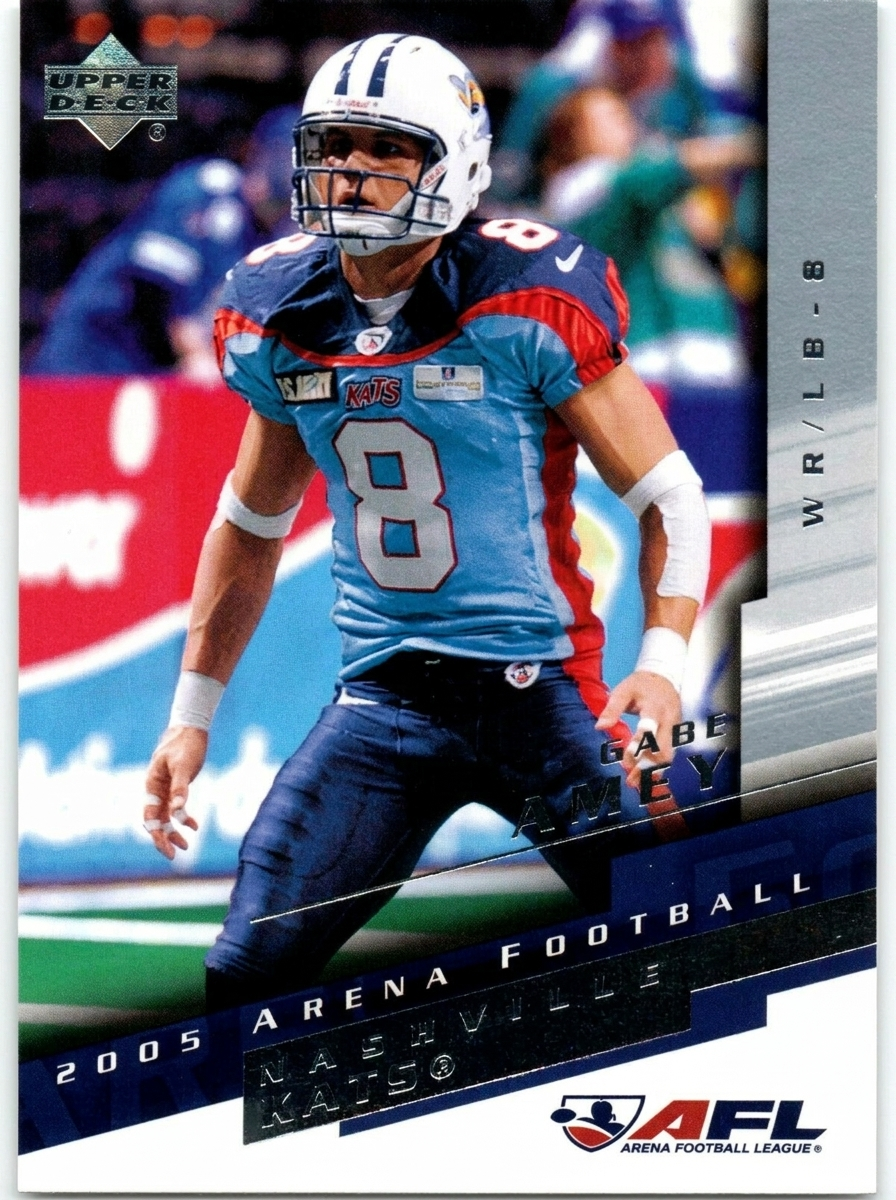
2005 Upper Deck Football Card
When I moved back to Hawaiʻi in 2005, the cap I had been carrying since reading, “No shipping to Hawaiʻi” in the catalog on my bedroom floor was gone.
There is a name in psychology for the quieter of those two realizations. It is the one that did the most work to dismantle the cap.
The insight
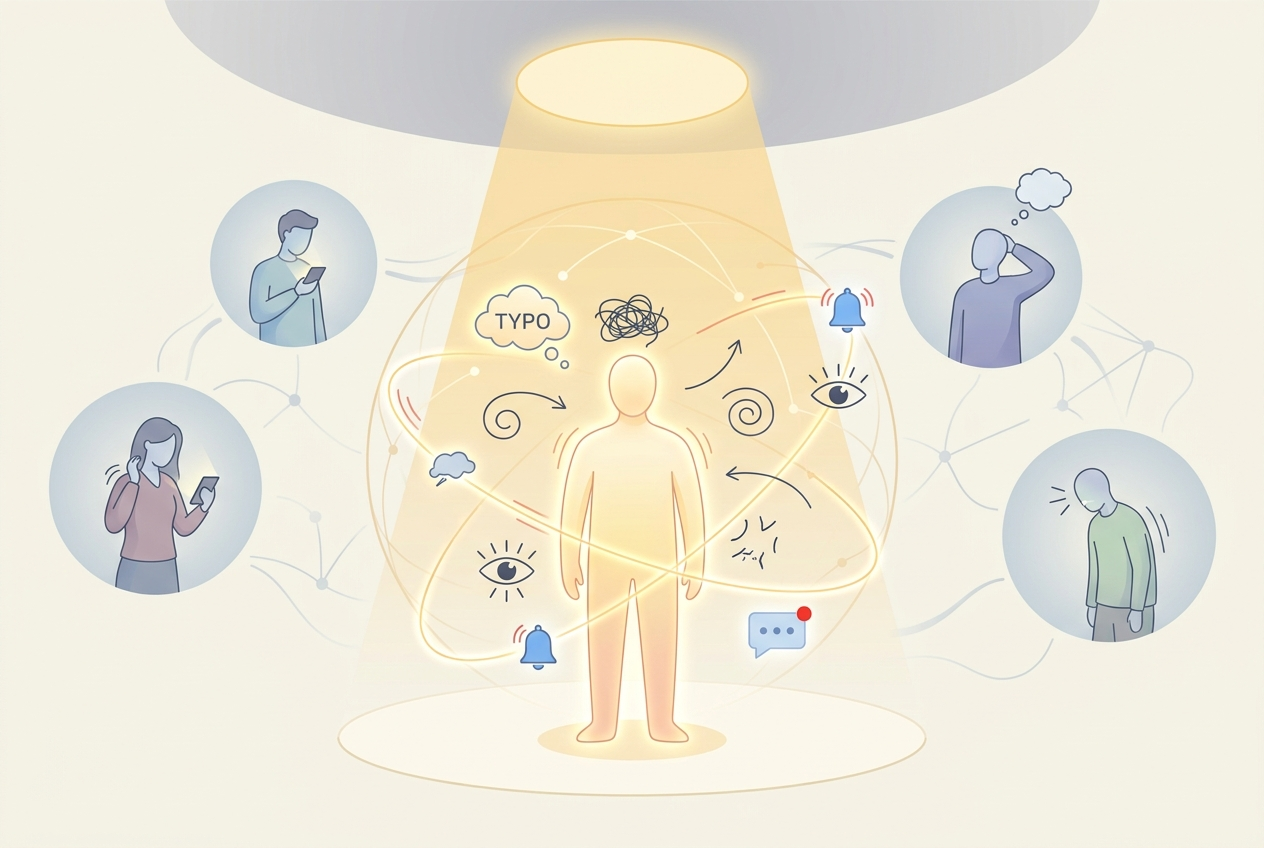
In 2000, a Cornell psychologist named Thomas Gilovich ran one of the most quietly devastating experiments in social psychology. He had college students put on an embarrassing t-shirt, a big Barry Manilow logo across the chest, and walk into a room full of their peers. Then he asked them to predict how many people in that room would notice and remember the shirt.
The students estimated about half.
The actual number was about a fifth. And most of those couldn’t recall what the shirt looked like a few minutes later.
Gilovich called it the spotlight effect: the universal human tendency to overestimate how much other people are paying attention to us. We walk through our lives feeling like we are on a lit stage, every flaw visible, every misstep recorded. In reality, the spotlight only exists inside our own heads. Everyone else is too busy starring in their own movie.
That is what Macon taught me, slowly, over a season. The room I had been afraid of my whole life had been thinking about itself the whole time. The criticism I was so terrified of would not be remembered an hour later. People are not editors of my life. They are protagonists of theirs, the same way I am the protagonist of mine. They have their own bills, their own anxieties, their own families, their own kids who need rides somewhere. Whatever I do, embarrassing or brilliant, occupies maybe ten seconds of their day before the next thing crowds it out.
And once you really know that, deep in your bones, an enormous amount of unnecessary armor falls off.
The audience you have been performing for has been busy thinking about itself the whole time.
the application
Imagine the people whose opinions you have been quietly bracing against your whole life.
The colleagues you think are scrolling carefully through your LinkedIn post. The classmates from a decade ago who you think are tracking your career. The relatives whose comments you rehearse defenses for. The strangers in the room whose passing glance you imagine carries weight.
Now imagine those same people, right now, in this very moment.
They are doing dishes. They are arguing with a spouse. They are worrying about a parent who has been forgetting things. They are anxious about a meeting tomorrow. They are not, in any meaningful way, thinking about you.
The spotlight is not real.
Or rather, the only spotlight that exists is the one inside your own skull, and it is shining on the wrong stage.
The opportunities you have not chased, the rooms you have not walked into, the things you have not said, the version of yourself you have not let people meet, most of those decisions were made for an audience that does not exist in the form you imagine.
What We Can Steal
The audience you fear is mostly in your head.
People are starring in their own movies. Whatever you do, good or bad, gets a passing mention before life moves on. Plan your life for the people who are actually paying attention, which is almost always a much smaller number than you imagine.Anonymity is permission.
When nobody knows who you “should” be, you finally get to find out who you actually are. You don’t have to move thousands of miles to find that. But sometimes a new room, a new city, a new chapter is the gift of not being seen. Use it.Authenticity attracts the right people.
Editing yourself for a vague, imaginary audience scares off the specific, real people who would actually love who you are. The cost of not being yourself is the cost of the people you would have connected with if you had been.Criticism has a half-life.
What you do today will not be remembered the way you fear it will. Even your worst moment is forgotten by other people much faster than it is forgotten by you. Knowing that is permission to swing.
Mahalo for reading this week’s Mana‘o Bomb.
Next week, we’ll drop another idea from Hawai‘i. A story that sparks growth, resilience, and purpose.
For those who build what they wish existed.