

The Four Words That Changed My Life | with Gabe Amey
Part 1 of 5: The Origin of RiseHI
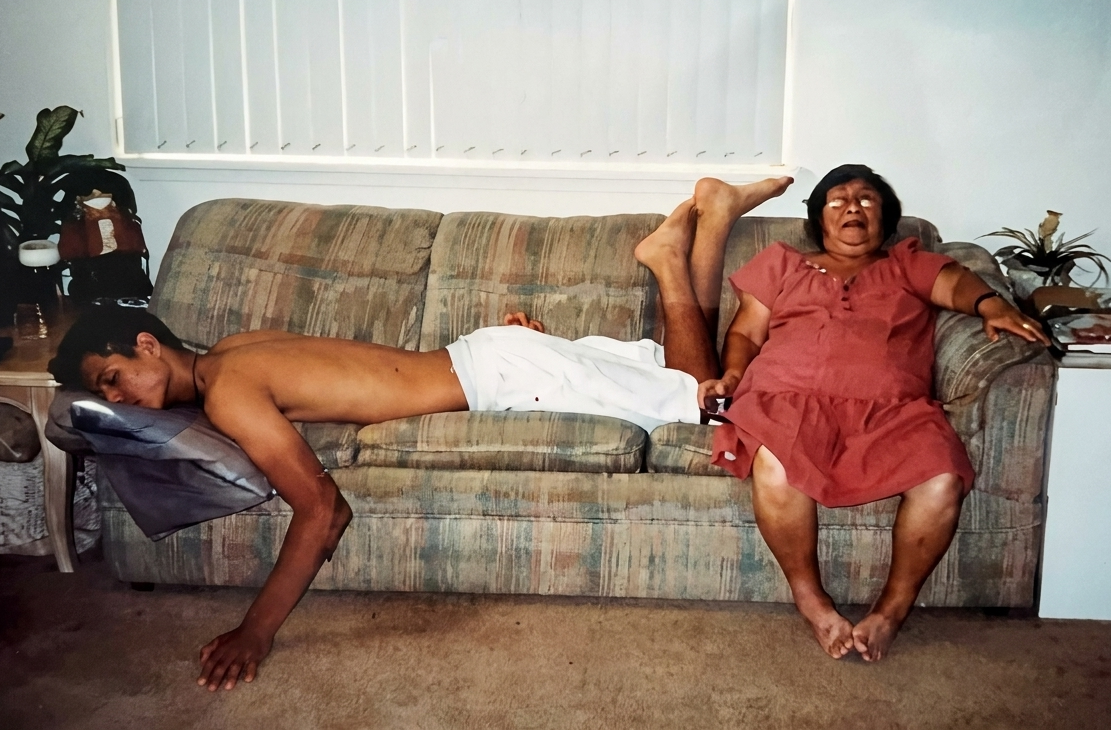
Me and Aunty Tomi ~ 1994
The Story
What does it do to a kid when the world quietly teaches him that where he’s from doesn’t count?
My Aunty Tomi used to pick me up at 6 a.m. every Saturday and Sunday. I was ten years old. She drove a 1978 red Chevy Nova that she had retrofitted into a mobile storefront. The passenger seat was gone. The back seat was gone. In their place were tent poles, cement blocks, a tarp, and boxes of everything we would sell that day at the Aloha Stadium Swap Meet. When I climbed in, my seat was a pile of tent poles. Totally illegal. It was the late 80s, early 90’s. She must have known the guy giving vehicle safety checks.
Aunty Tomi was my hānai aunty, a hānai mother to my own mom, which made her something like a second grandmother to me. She was quiet and watchful, always in a mu‘umu‘u. By day she worked as a seamstress at Jams for over thirty years. The swap meet was her side hustle. Before moving to Hawaiʻi in the 1950s she had lived in Northern California, and during World War II she was sent to an internment camp, along with most Japanese Americans in the country. She didn’t talk about that much. She didn’t talk about much at all. She watched, and she worked.
What we sold were posters. New Kids on the Block. Boyz II Men. Whitney Houston. Teenage Mutant Ninja Turtles. Anything that was hot. Each poster was slipped into a vinyl cover and hung from a pole on a clothes hanger, so customers could flip through them like they were flipping through a rack of shirts. New Kids on the Block sold like crazy. We sold t-shirts too, always whatever was trending.
I was the muscle. I set up the tent. I lifted the cement blocks that anchored the corners. I jammed the poles into place. Aunty Tomi was in her sixties, and I was ten, so the heavy work was mine. Once we were open, I was also the salesperson. I handed over posters. I made change. At 5 p.m. I broke everything down and loaded it back into the Nova, and I was home by 6:30.
She paid me twenty dollars a day. For a ten-year-old in the early 90s, twenty dollars was a fortune.
I saved everything. At one point I had six hundred dollars stacked in my wallet. I felt like the richest kid in Hawaiʻi.
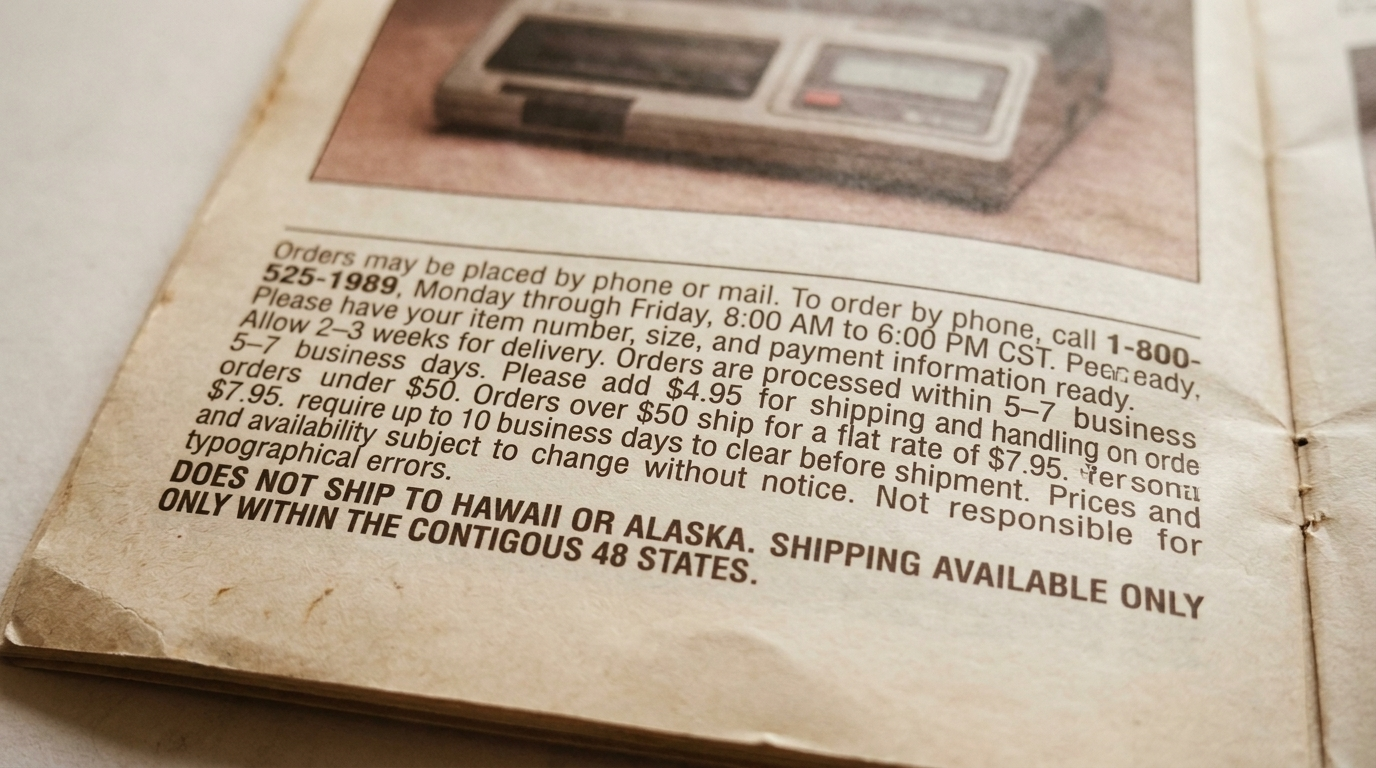
Then one afternoon, I was on the floor of my bedroom flipping through a catalog, probably a Toys R Us catalog. I knew exactly what I wanted. It was one of those electric football games. You flipped a switch and the whole metal field vibrated, so the little plastic players skittered around in some imitation of a play. I had wanted one forever. And now I had the money. More than enough.
I found the page. I read the price. And then I read the fine print.
“No Shipping to Hawaiʻi.”
I sat on my bedroom floor holding a wallet full of money, and I couldn’t buy the thing I wanted.
It wasn’t about the football game. Not really. It was about what those five words told me, quietly, without explanation. That Hawaiʻi wasn’t on the map that mattered. That this company could run a fine business without us. That the people who decided what got sent where had decided we were too far, too few, too much trouble. We were insignificant. We didn’t count.
I didn’t have words for it at ten. But I felt it.
That feeling didn’t stay on the bedroom floor. It followed me. Every time I saw “contiguous 48 states.” Every time a release date came late, or not at all. Every presidential election, when the winner was declared before our measly four electoral votes were even counted. Every time a visitor from the mainland acted surprised we had electricity or McDonald’s. Small messages on their own. Added up, they became quiet programming in my head: whatever the big, important world is, it’s happening somewhere else, and you are not part of it.
I carried that program with me for years. I didn’t know I was carrying it. That’s the thing about beliefs you absorb instead of choose. You don’t notice them. You just live inside them.
This is where our founder’s story begins, because everything RiseHI does traces back to this bedroom floor. And if you are from Hawaiʻi, there is a good chance you learned some version of this lesson too. You may still be carrying it.
There is a name for what happens inside a person when the world repeatedly tells them their effort doesn’t count.
The insight
The psychologist Martin Seligman gave it a name in the 1960s: learned helplessness. In his original experiments, animals exposed to conditions they couldn’t control eventually stopped trying to escape them, even after escape became possible. The cage door was open. They didn’t walk through it. They had been taught, through repetition, that their actions didn’t matter, and they kept believing it after the teaching stopped.
Humans do the same thing. We absorb the lesson of our environment. If the world around you consistently signals that your voice, your place, or your effort doesn’t count, you eventually stop testing whether it does. You shrink your expectations to fit the space you’ve been given. You don’t notice you’re doing it.
That is what “does not ship to Hawaiʻi” did to me. It wasn’t one message. It was one message in a pattern. Save six hundred dollars, and it still won’t be enough, because the problem isn’t what you have. The problem is where you are. That was the lesson I absorbed, and it sat underneath every decision I made for years. I didn’t apply for things I could have gotten. I didn’t speak up in rooms where I belonged. I kept my ambitions small enough to match the size of the world I believed I was allowed to take up.
In Learned Optimism, Seligman writes that this is not a personality flaw. It is a trained response. Which means it can be untrained.
The wound wasn’t that I couldn’t buy a toy. The wound was that I believed the reason.
the application
If you grew up here, you know this feeling.
Maybe it wasn’t a catalog. Maybe it was a school counselor who steered you toward the “realistic” option. Maybe it was a relative who told you the mainland is where the real opportunity is. Maybe it was a show you watched where nobody looked or sounded like anybody you knew.
Small messages. Nobody meant harm. They still added up.
We walk around carrying stories about ourselves that were never ours to begin with. We inherited them. We absorbed them. We never questioned them.
And the quiet damage is this: we stop testing what we are actually capable of. Not because we failed. Because we never tried.
Most of us are not held back by a lack of talent. We are held back by a lesson we learned before we were old enough to know we were learning it.
What We Can Steal
Notice what you absorbed.
The most limiting beliefs rarely announce themselves. They feel like facts. Ask what you quietly accept about yourself or your place that you have never actually tested.Small messages add up.
A single line of fine print won’t shape a life. A thousand of them will. Pay attention to the patterns in what you were told, shown, and not shown growing up.Where you’re from is not a ceiling.
It is a starting point. Anyone who hands you a smaller map, on purpose or by accident, is giving you theirs, not yours.A trained belief can be untrained.
Naming it is the first step. The rest of this series is about what came next
Next week, in Part 2, I’ll share the years I spent on the continent, the people I met there, and the moment I realized the cap I had been living under was not the world’s. It was mine.
Mahalo for reading this week’s Mana‘o Bomb.
Next week, we’ll drop another idea from Hawai‘i. A story that sparks growth, resilience, and purpose.
For those who build what they wish existed.