

Why Your Fear Looks Like Courage to Everyone Else | with Kimié Miner
The Story
What if the thing you're most afraid to show people is the exact thing they need from you?
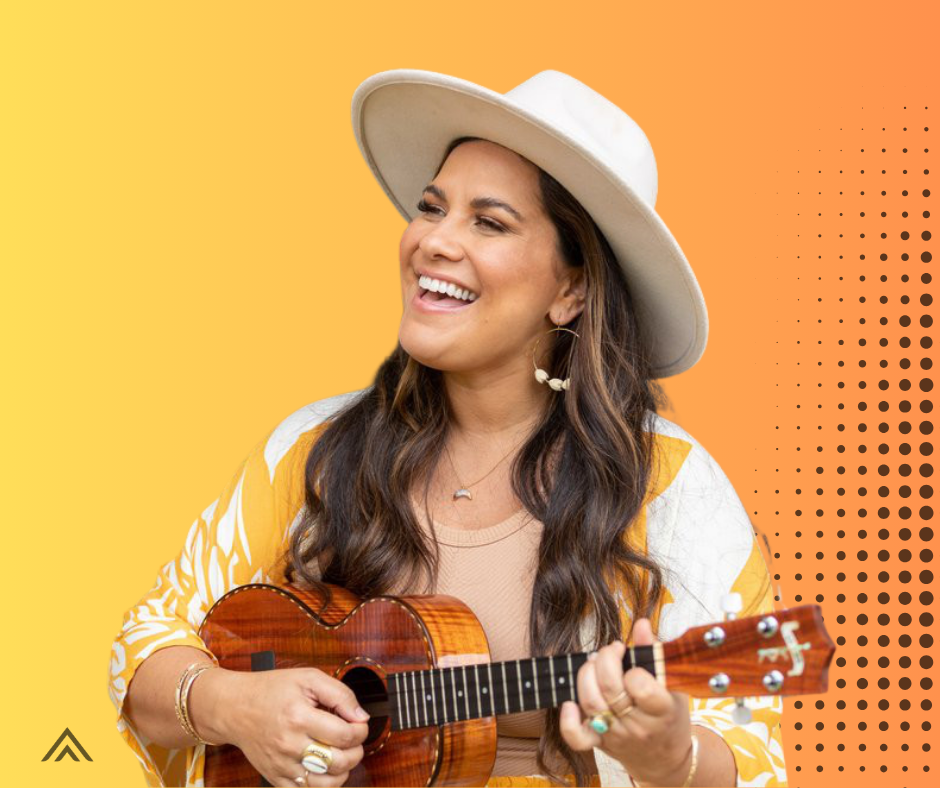
Kimié Miner grew up in Kona, a self-described tita running the rocks with her brothers, fishing and surfing. Her parents divorced when she was young and the family moved around a lot.
“It was pretty chaotic for us,” she says. “When I was a kid, I never felt heard.”
So she went inward. First an ʻukulele, then her dad's nylon string guitar. Music became her journal, her therapy. She would sit on the beach and write about the ocean, tucking kaona into the lyrics the way Hawaiian writers always have. It was a way to be heard while doing it alone in a corner.
In ninth grade she boarded at Kamehameha Schools Kapālama, and she never meant for anyone to listen. But people did.
She would open her dorm room door and find five girls sitting in the hallway. They pushed her into the senior talent show, and she won. Still, every time she got in front of people, she was terrified.
"What if I'm not good enough? What if people think it sucks?”
The writing she could not stop. The sharing was the hard part.
She graduated in 2003 on the Dean's list, and everyone told her the same thing: you can't just be a full-time musician. So she took a scholarship to the University of San Diego, wrote a hundred songs her first year, and mailed burned CDs to friends. Still writing for herself.
Then one weekend she and a friend ended up in the green room of a Barrington Levy show at a San Diego stadium. Her friend told him: she sings, and she writes her own songs. Barrington asked her to sing something. Right there.
"Immediately I was like, no, no, uh-uh."
In Hawai'ʻi, she explains, we are raised to be humble, to not sell ourselves on every corner. In Jamaica it is the opposite. You believe in yourself out loud. Barrington was taken aback that this girl was shrinking from her chance. Her friend nudged her again.
“I don’t know what changed in me,” she says. “I just said, what do I have to lose?”
She sang him a song she had written the week before. He asked her plans. "I have no plans. I love to sing." He asked her to open for him on his West Coast tour, and before it started he bought her first plug-in guitar.
Her first show was a park in San Jose, thousands of people, nobody she knew. Barrington was a sink-or-swim mentor. "What do you mean you're nervous?" She walked up and sang her own song to a crowd that had never heard it. "Everyone in the front row was moving and dancing," she says. "It was exhilarating."
The nerves didn’t go away for five years. Her passion had simply gotten bigger than the fear. The road after that wound through Jamaica, Hong Kong, a MySpace song that passed a million plays, a record deal that fell apart, and a cutthroat stretch in Los Angeles. She came home jaded, with a catalog of unreleased music.
Then, jamming in a garage, a friend asked: why are we waiting? She had no answer. So she stopped waiting, funded the CDs on Kickstarter, and released the music herself. Three of the songs went on Hawaiʻi radio instantly, and two of them were the top hits of that year.
Today Kimié is a Grammy-nominated singer/songwriter, producer, and founder of Haku Collective, a company by artists, for artists, built to give Hawaiʻi's music makers the roadmap she never had.
"When you open a door, you should leave it open for the person behind you," she says. Strangers write her letters about how her songs carried them through the death of a family member.
The thing she hid in a dorm room became the thing that connected her to thousands. There is a reason that keeps happening, and it starts with what she was really afraid of.
The insight
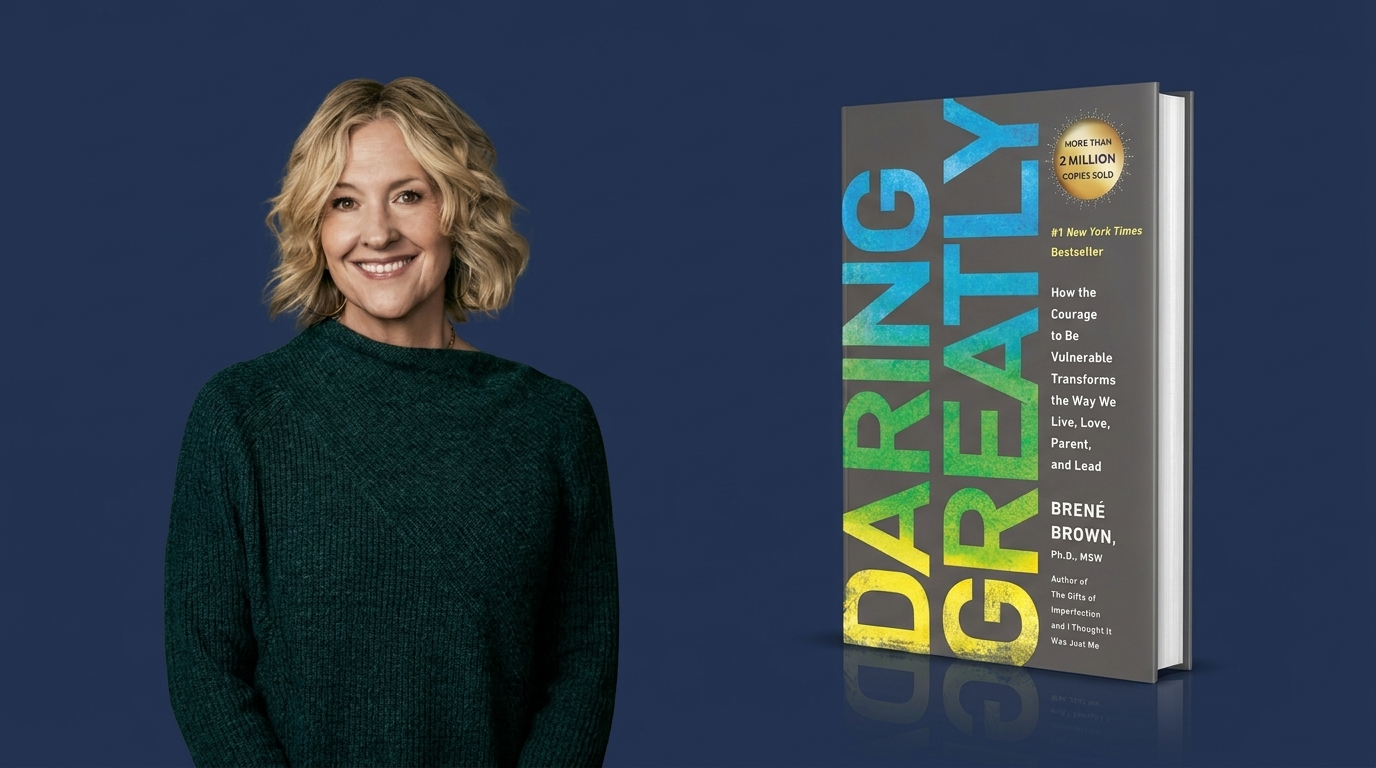
Brené Brown spent more than a decade at the University of Houston interviewing over a thousand people about shame, courage, and connection. In her book Daring Greatly, she defines vulnerability as uncertainty, risk, and emotional exposure. And her central finding runs against everything we are taught. Vulnerability is not weakness. It is the birthplace of creativity, connection, and courage.
Kimié put it in her own words: "An artist is the most vulnerable person because we are sharing the inner thoughts of our mind with the world. I think that was the biggest reason why I didn't want to share my music in the beginning, because then everyone would know all of my deepest, darkest secrets."
Here is the part Brown's research makes clear. What we experience as exposure, other people experience as courage. A 2018 study in the Journal of Personality and Social Psychology gave this a name: the beautiful mess effect.
Across seven experiments, researchers asked people to imagine showing vulnerability, admitting a mistake, confessing feelings, and in one case improvising a song in front of judges. When people pictured themselves doing it, they saw weakness and inadequacy. When they pictured someone else doing the exact same thing, they saw courage, honesty, something worth admiring.
We see our own exposure in sweaty close-up. We see everyone else's from a flattering distance.
That is the green room in San Diego in a single sentence. To Kimié, singing a week-old song to a reggae star was the most naked thing she could imagine. To Barrington Levy, it was a young artist with the nerve to sing an original on the spot.
He did not hear the flaws she was bracing for. He heard someone worth putting on tour.
And it kept happening. The girls outside the dorm door. A crowd dancing to a song they had never heard. The million plays on MySpace. The letters from strangers. Every time she showed the thing she wanted to hide, connection came back the other way.
Brown adds one guardrail worth keeping. Vulnerability without boundaries is not vulnerability. Kimié did not sing to a stadium that night. She sang to one person, in a small room, who was also in the arena. The courage is in showing the real thing to the right people, not in broadcasting everything to everyone.
What feels like exposure from the inside looks like courage from the outside.
the application
Most of us have a dorm room.
A place where we keep the real thing. The song. The business idea. The essay. The thing we make when nobody is watching, the thing that comes from somewhere too deep to explain.
And most of us keep the door shut.
Not because the work is bad. Because it is ours. Because if we open the door, people will know what is actually going on in there.
So we wait until it is polished. Until we are sure. Until someone with authority tells us it is allowed.
But nobody outside the door can hear what we hear.
They cannot hear the rhyme we are embarrassed by. They cannot see the mistake we are bracing for. They only see someone brave enough to open the door.
There are people sitting in the hallway right now.
Waiting for whatever it is we are afraid to show them.
Maybe the question is not whether it is good enough.
Maybe it is what we have to lose.
What We Can Steal
Judge your courage from the outside.
What feels like exposure to you reads as bravery to everyone else. When you hesitate, ask how you would see someone else doing the same thing.Let passion outvote fear.
The nerves may never fully leave. They do not have to. They only have to be smaller than the reason you are doing it.Start in the small room.
Sharing the real thing with one person who is also in the arena is not a lesser step. It is where careers actually turn.Stop waiting for permission to release.
No label, boss, or gatekeeper has to sign off before your work reaches the people it was made for. Ask why you are waiting, then stop.
Mahalo for reading this week’s Mana‘o Bomb.
Next week, we’ll drop another idea from Hawai‘i. A story that sparks growth, resilience, and purpose.
Keep rising. Keep learning.