

Why You Don’t Need More Time | with Jasper Wong
The Story
In physics, gas expands without pressure.
In life, so do excuses.
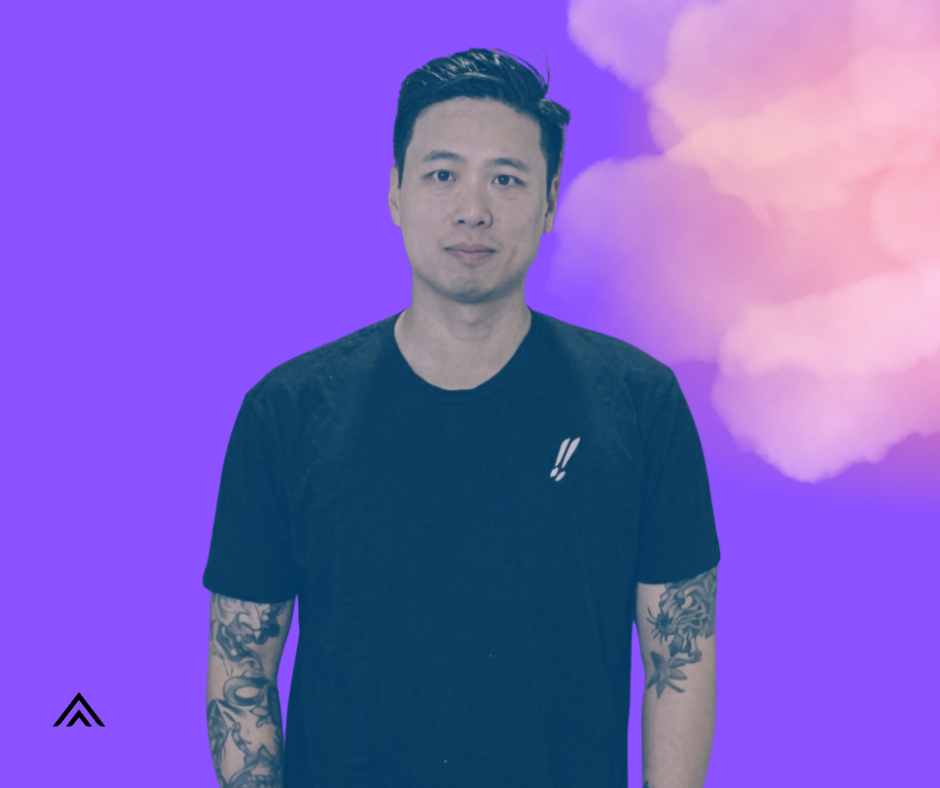
Jasper Wong, a Kalani High School graduate and co-founder of POW! WOW! Hawaiʻi (now known as World Wide Walls), didn’t start with momentum.
He started with rejection.
After college, he moved to Hong Kong to pursue art and learn how to bring ideas to life through manufacturing. But when he tried to get his work shown, galleries turned him away, not because of his talent, but because he was seen as the “wrong kind of Chinese.” Not local enough. Not marketable enough.
So he stopped waiting for permission.
He created his own gallery.
Brought artists together.
Built the kind of space he couldn’t find.
That idea, collaboration, community, process over perfection, became the seed.
In 2011, he brought it home to Hawai‘i.
But Hawai‘i didn’t immediately embrace it.
The concept wasn’t proven locally, and sponsors didn’t see the vision. Funding that was promised started to fall through. The idea of artists coming together to paint large-scale murals, in public, on walls that didn’t belong to them, was a little too grey area for many.
Art…or graffiti? Culture…or vandalism?
There was skepticism, risk, and very little money.
So Jasper started solving problems.
He reconnected with his Kalani classmate, Kamea Hadar, now a well-known artist in his own right, who helped house the visiting artists at his family’s place in Pūpūkea, eliminating the need for hotel costs.
One constraint solved. But the bigger one remained.
No funding.
At that point, Jasper had a choice:
Scale it down… or make it happen anyway.
He chose to make it happen.
He set a fixed date in February and committed to it…publicly. No moving it. No delays. Then he added real pressure.
He pulled out his credit card and started buying flights for artists from around the world, locking in their arrival before he had the resources to support them.
Now it was real. People were coming. The date was set. The idea had to work. And when everyone arrived, something powerful happened.
Artists from different countries, different styles, different backgrounds came together, not just to showcase finished work, but to create in real time. They collaborated. They experimented. And eventually, they stepped outside the walls of the gallery and onto the streets.
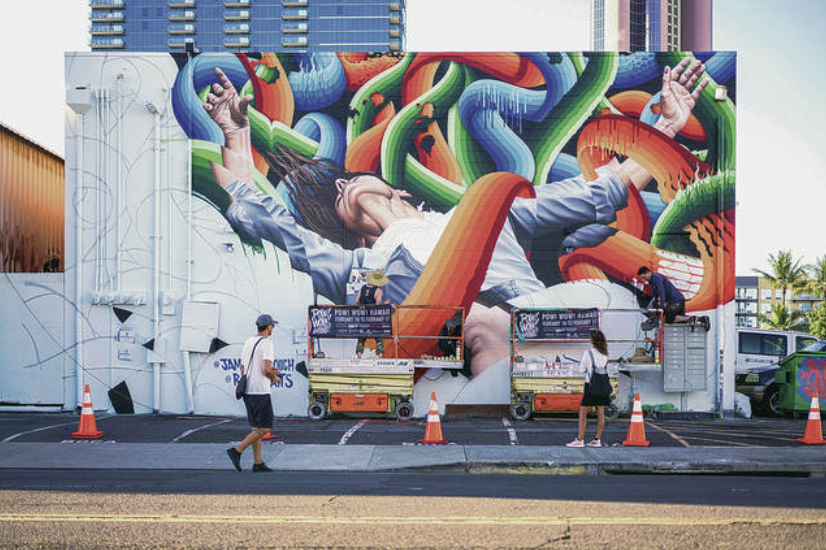
Murals. Public art. Work that couldn’t be sold, couldn’t be owned, and couldn’t be ignored.
At first, it was controversial. But it also did something unexpected.
It brought people in.
It sparked conversation.
It turned blank walls into shared experiences.
And because Jasper had created constraints, financial, time, and resource, there was no room for hesitation. Only execution.
What started as an unproven idea, held together by belief and a maxed-out credit card, became a movement that has now spanned cities across the world.
Not because everything was ready. But because it wasn’t.
Because the pressure forced it to become something more.
And that’s the lesson.
Sometimes the most important move isn’t removing constraints…
It’s creating them.
The insight
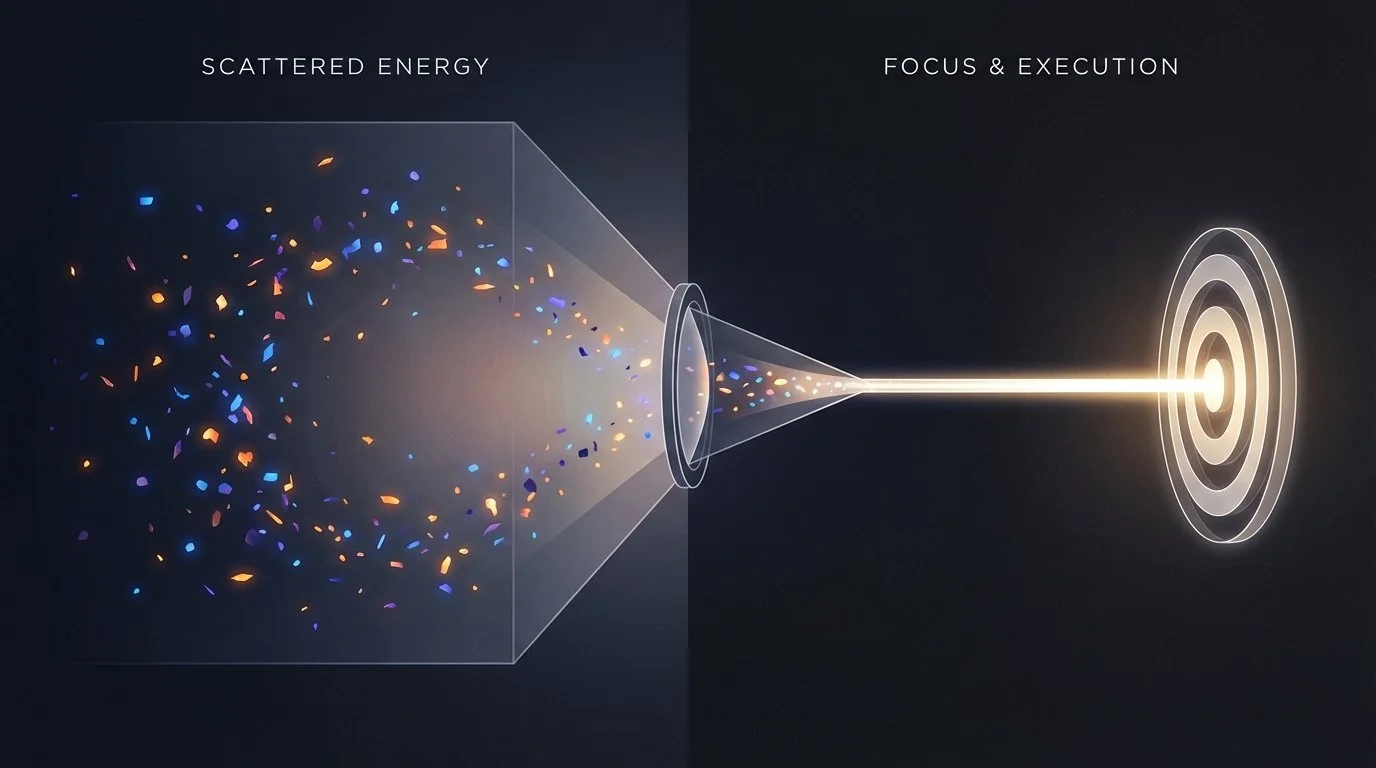
Imagine a gas in a small container.
There’s pressure.
Everything is compressed.
Movement is limited.
Now put that same gas into a bigger room.
More space.
Less pressure.
It expands in every direction.
That’s Boyle’s Law: when pressure decreases, volume increases.
And while that’s a principle in physics…it’s also a pattern in life.
When there’s less pressure:
Time expands into procrastination
Money expands into unnecessary spending
Ideas expand into endless planning
We tell ourselves we’re being thoughtful. But often, we’re just avoiding commitment.
Because without constraints, nothing forces a decision. Nothing forces action.
Jasper didn’t wait for pressure to show up.
He created it.
A fixed deadline.
Limited resources.
Real financial risk.
Those constraints didn’t hold him back. They focused him.
They forced decisions.
They forced collaboration.
They forced execution.
Without pressure, things expand. With pressure, things happen.
the application
This idea of constraints doesn’t just apply to big moments like starting a festival. It shows up in everyday life. Because constraints force decisions.
Financially, when money is flowing, it’s easy to spend without thinking. You eat out more often. You add another subscription. You upgrade things that don’t really need upgrading. There’s no immediate consequence, so there’s no urgency to decide what actually matters.
But when money gets tight…behavior changes.
You start budgeting.
You start prioritizing.
You start asking, “Do I really need this?”
The same thing happens with space.
When you have more room, you tend to fill it. Closets get packed. Garages become storage units. You create “dump rooms” just to avoid making decisions about what stays and what goes.
But when space is limited…you’re forced to choose.
What do I keep?
What do I donate?
What actually adds value?
And then there’s time.
When your schedule is open, it feels like you have plenty of it. So tasks get pushed. Work gets delayed. That important presentation gets done the night before.
Not because you’re incapable. But because nothing is forcing you to act sooner.
Most of us don’t naturally have the discipline to budget consistently, declutter regularly, or plan proactively. That’s human nature.
Which is why the solution isn’t to rely on discipline alone.
It’s to create manufactured constraints.
Financial:
Set a fixed monthly spending cap, even if you don’t need to
Give yourself a weekly “allowance” to force prioritization
Time:
Set earlier personal deadlines than the actual due date
Publicly commit to a deliverable so there’s accountability
Space:
Use the “one in, one out” rule for anything new
Schedule regular purge days where you must donate or throw things away
These constraints aren’t about restriction. They’re about clarity. Because when something is limited, you’re forced to decide what matters most.
And when you consistently create those constraints…
Discipline becomes less about willpower.
And more about design.
What We Can Steal
Create constraints before you need them.
Don’t wait for pressure to show up. Intentionally design limits that force better decisions now.Constraints drive better choices.
When money, time, or space is limited, you’re forced to prioritize what actually matters.Manufacture discipline through structure.
Instead of relying on willpower (good luck!), build systems such as budgets, deadlines, and limits that guide your behavior.Make action the default.
The right constraints remove hesitation and make execution the easiest path forward.
Mahalo for reading this week’s Mana‘o Bomb.
Next week, we’ll drop another idea from Hawai‘i. A story that sparks growth, resilience, and purpose.
Keep rising. Keep learning.