

The Story
What happens when you keep showing up, even when nothing seems to be happening?
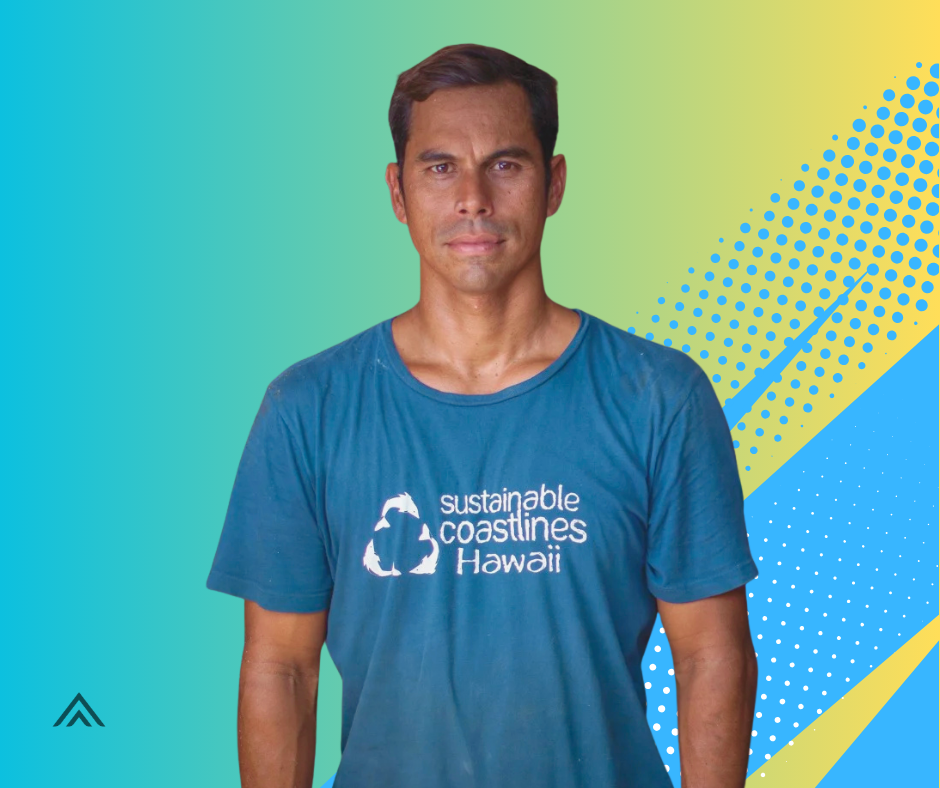
Kahi Pacarro grew up in Kailua, where the ocean felt like a constant companion. He learned to surf at Kailua Beach. Learned to love the shoreline. And for a long time, never questioned what lay beneath his feet.
That changed after he left Hawai‘i.
Traveling the world in his twenties, Kahi saw both beauty and destruction. Coastlines overwhelmed by pollution. Communities living with the consequences of overconsumption. When he finally came home, his perspective had shifted. Standing on Kailua Beach, he looked down and realized something he had never seen before.
“I looked down at my feet and realized that all those colors were actually plastic.”
That moment stayed with him.
He started by picking it up. Then he asked a bigger question. How could he help others see what he now couldn’t unsee? The answer was beach cleanups. In 2011, with eight friends, homemade T-shirts, and fifty dollars each, they started Sustainable Coastlines Hawai‘i. They expected thirty or forty people. Nearly two hundred showed up. And the only question anyone asked was, “When’s the next one?”
The work grew. The money did not.
For four years, Kahi worked without getting paid.
“Starting a nonprofit’s not cheap,” he said. “I worked for four years without getting paid.”
Friends and family questioned whether this was sustainable. Whether it was responsible. Whether it was time to move on. There were moments he wondered the same.
Then came a moment no one could plan for. After a 2013 molasses spill caused by Matson in Honolulu Harbor, a legal settlement was reached. In 2015, Sustainable Coastlines Hawai‘i received $300,000 to support environmental restoration.
The funding arrived in one moment.
The preparation took years.
That gap is where the real story lives.
The insight
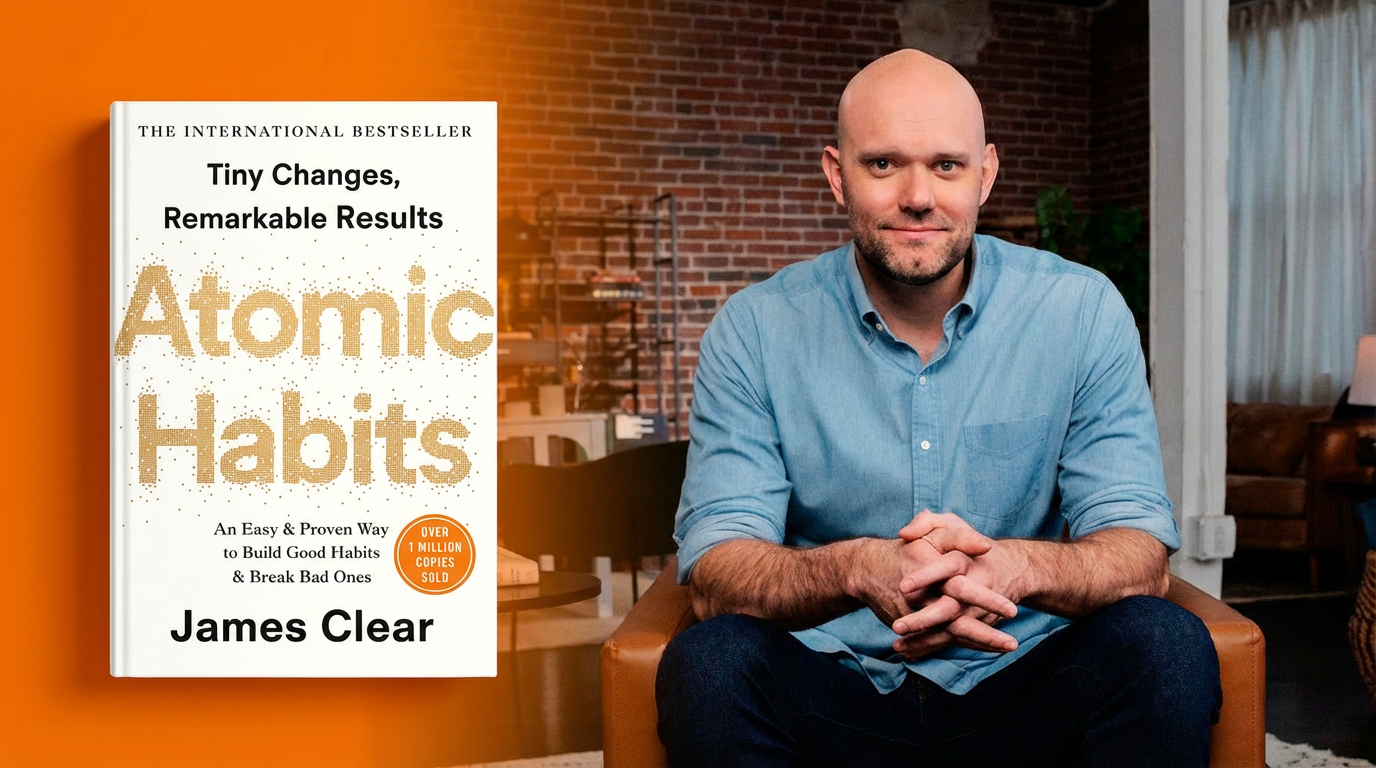
In Atomic Habits, James Clear describes a pattern that explains why so many meaningful efforts feel discouraging before they succeed. He calls it the Plateau of Latent Potential.
In the early stages of change, effort rarely produces visible results. Instead of outcomes, you are building capacity. Instead of rewards, you are storing potential. Progress is happening below the surface, even when nothing appears to be moving.
This creates what Clear calls the Valley of Disappointment — the long stretch where people decide, “This isn’t working,” and quit. Not because the effort failed, but because feedback is delayed.
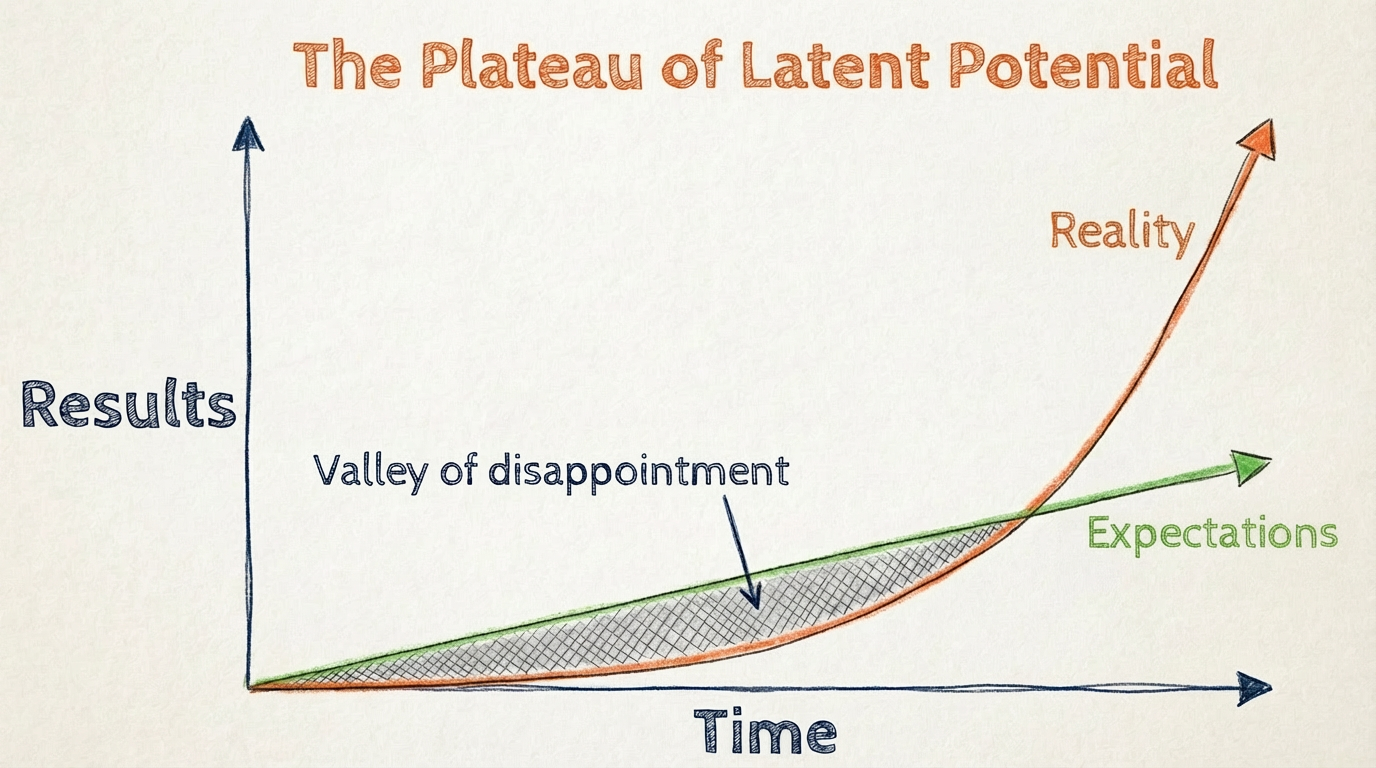
Kahi’s work followed that exact curve. Years of unpaid labor. Cleanups without funding. Education without recognition. On the surface, it looked like stagnation. Underneath, trust was forming. Systems were being built. Credibility was accumulating.
When the Matson settlement finally arrived, it didn’t create Sustainable Coastlines Hawai‘i. It revealed what years of unseen effort had already made possible.
Today, Sustainable Coastlines Hawai'i has an annual operating budget of over $1M to support beach cleanups, inspiring our community to care for Hawai‘i’s coastlines.
Clear’s insight is simple but powerful:
Unrewarded effort is not wasted effort. It is stored potential.
What looked invisible was, in fact, inevitable.
the application
James Clear explains delayed progress with a simple image.
Imagine an ice cube sitting in a cold room.
At 25°F, nothing happens.
At 26°F, nothing happens.
At 27°F, still nothing.
At 28°F, 29°F, 30°F — the ice cube looks exactly the same.
Then at 32°F, it melts.
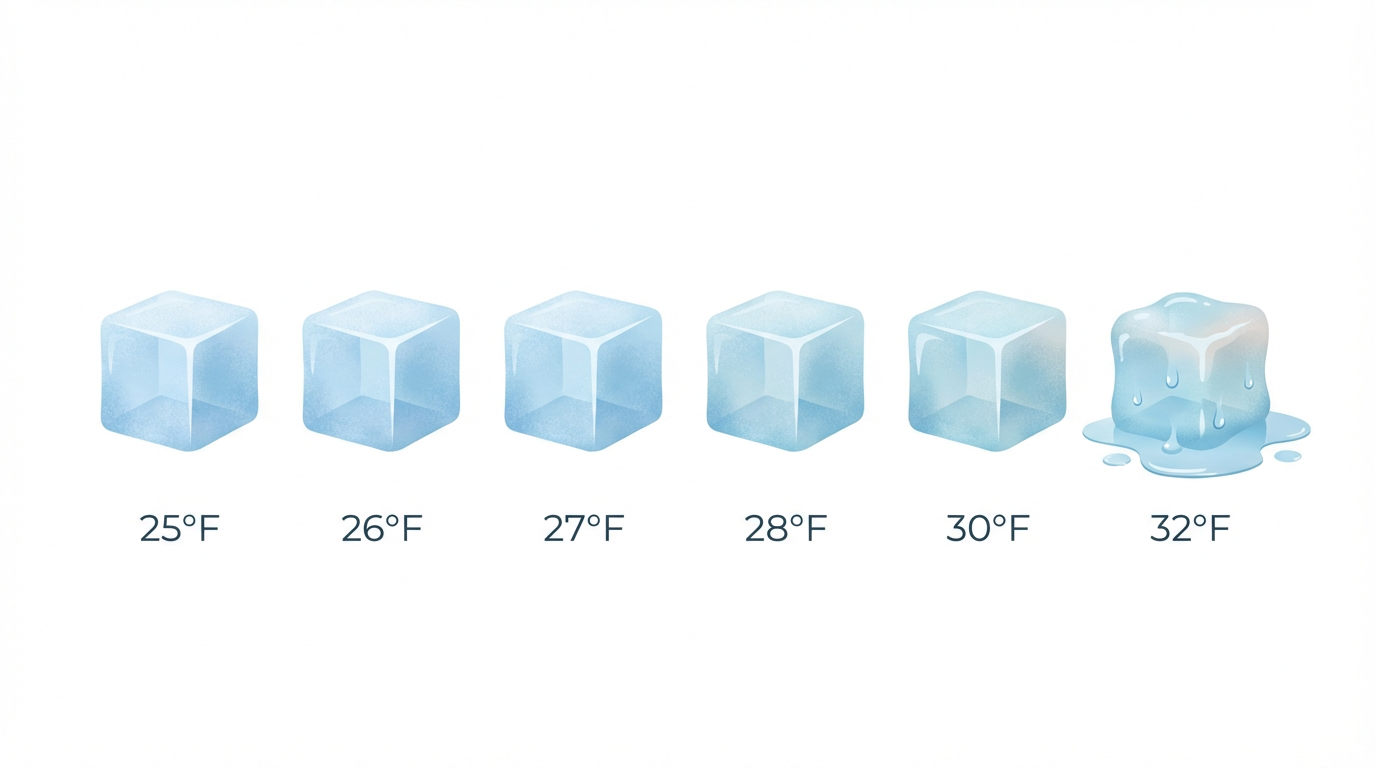
The breakthrough wasn’t caused by that final degree.
It was the result of every degree before it.
Clear uses this metaphor to show how progress often works. Effort accumulates quietly. Capacity builds invisibly. Conditions shift long before outcomes appear. When change finally shows up, it feels sudden — but it is anything but.
This is why the early phase of meaningful work feels so misleading. The lack of visible results doesn’t mean nothing is happening. It means the work is still warming the room.
Progress doesn’t always announce itself step by step.
Sometimes it waits until the conditions are right — and then reveals everything at once.
The challenge isn’t doing the work.
It’s trusting the temperature is rising, even when the ice hasn’t melted yet.
What We Can Steal
Trust the unseen progress.
Early effort often strengthens foundations before it produces visible results.Stay engaged through the quiet phase.
The period that feels slow is often the one doing the most preparation.Build capacity before expecting outcomes.
Lasting change depends on conditions being ready, not just effort being applied.Remember that outcomes lag behind effort.
The results you want often arrive after the work has already done its job, so stopping early can mean quitting right before progress becomes visible.
Mahalo for reading this week’s Mana‘o Bomb.
Next week, we’ll drop another idea from Hawai‘i. A story that sparks growth, resilience, and purpose.
Keep rising. Keep learning.