

Why “Good Enough” Keeps So Many People Stuck | with Michelle Jaime

The Story
It’s easier to justify staying when nothing forces you to leave.
Michelle Jaime’s story does not begin with a big plan.
It begins with being close to possibility.
She grew up between Hawai‘i Kai and Kaimuki and attended Kaiser High School. When she was young, she and her brother lived for a time in a VW van with their dad. It was not framed as hardship. It was imaginative. Resourceful. Full of movement.
To make ends meet, her dad cleaned houses. Sometimes Michelle went with him. While he worked, she wandered. She looked. She noticed. In Mililani, she and her brother ran through model homes, pretending they were theirs. Picking rooms. Imagining how people lived. Deciding what they would change.
That was the first pull toward design.
Years later, she entered the interior design world professionally. She started small and worked her way up. Entry-level roles turned into larger responsibilities. She gained experience on high-end residential and hospitality projects across Hawai‘i. She was trusted. She was respected. She was building a strong career.
And because of that, she stayed.
“I always wanted to start my own business,” she reflected. “But had I not gotten laid off, I don’t think it would’ve happened. I think I would’ve been sort of a legacy employee somewhere.”
Then the recession hit.
In 2008, Michelle was laid off. The moment was painful and destabilizing, but it removed something comfort never would. It removed the option to keep waiting.
“It pushed me to do something that I didn’t think I was ready for.”
So she moved forward before certainty arrived.
Michelle went on to found her own interior design firm, The Vanguard Theory, which has since become a nationally recognized, award-winning practice. Her work now includes clients such as the Four Seasons Ko ‘Olina, Alohilani Waikiki, and Surfjack Hotel & Swim Club.

She did not leave because things were terrible.
She left because “good enough” finally loosened its grip.
And that quiet truth lays the groundwork for the deeper insight.
The insight
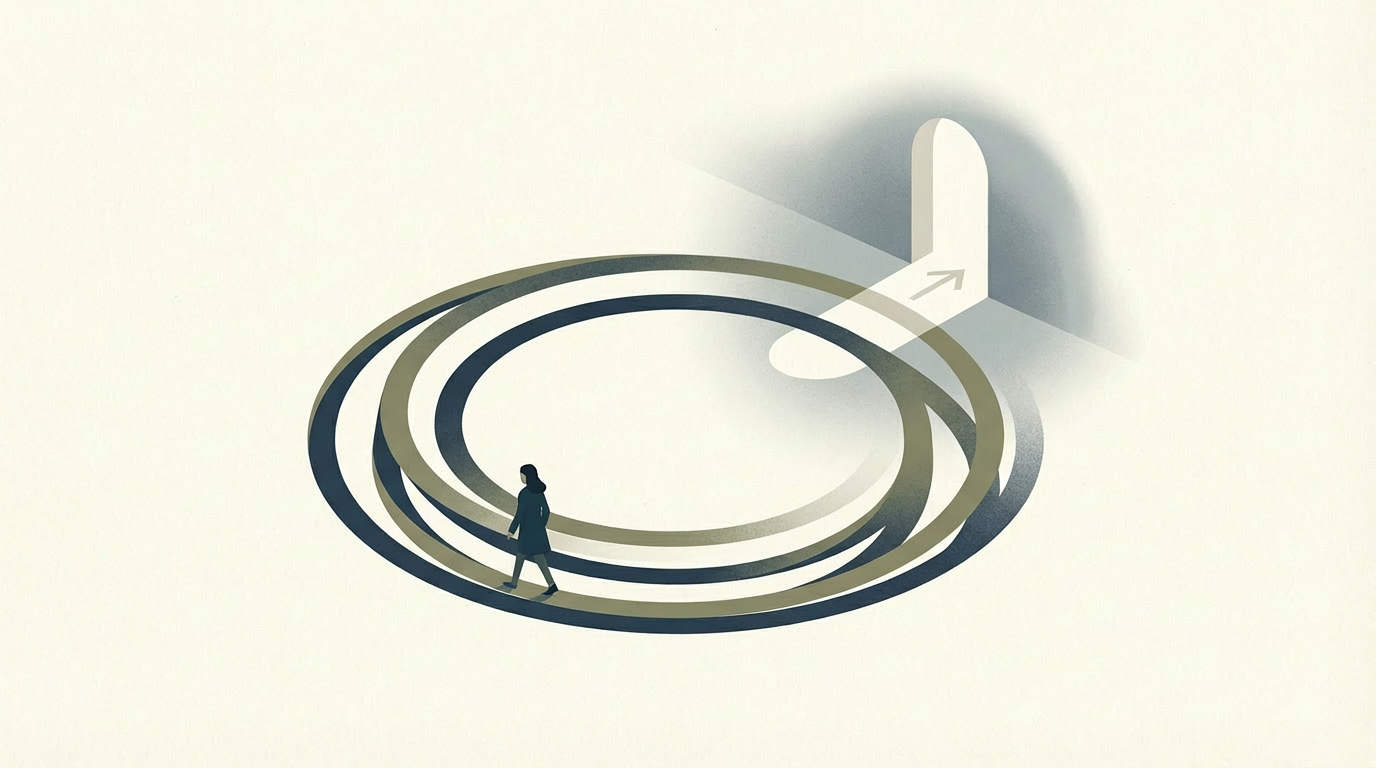
Psychologists use the Beta-Region Paradox to explain a quiet but powerful pattern in human behavior.
Think about a slow internet connection.
It works, but barely. Pages load. Videos buffer. Every task takes longer than it should. You complain about it. You feel irritated. You tell yourself you’ll call the provider later and upgrade. But because it still technically works, you keep putting it off.
Now imagine the internet goes completely out.
No signal. No loading. Nothing works. You pick up the phone immediately. You troubleshoot. You fix it.
That difference is the paradox.
When a problem is clearly bad, action is obvious. But when something is only moderately uncomfortable, it keeps us stuck. The situation is tolerable enough to endure, yet uncomfortable enough to create constant frustration. So instead of changing, we ruminate. We adapt. We stay.
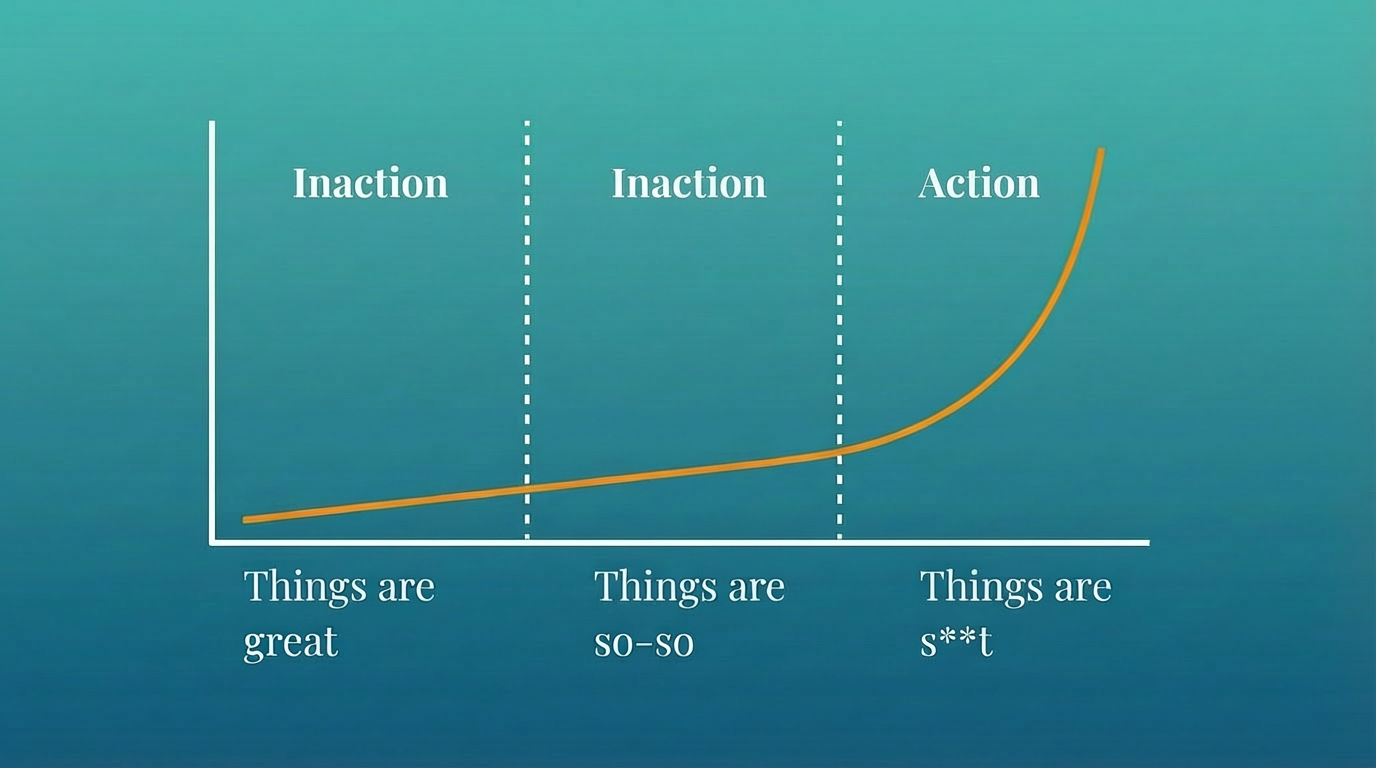
“Good enough” becomes a holding pattern.
This is where Michelle found herself.
Her career was working. She was trusted. She was moving up. Nothing was broken enough to demand a decision. And because of that, the discomfort never forced clarity. It lingered quietly in the background.
The recession changed the conditions.
Being laid off removed the buffer. The ambiguity disappeared. Action became necessary. The reality of her situation accelerated what comfort had delayed.
“It pushed me to do something that I didn’t think I was ready for.”
The paradox is simple, but unsettling.
The most dangerous place to stay is often not in crisis, but in a life that almost works.
the application
Most of us are not stuck because things are terrible.
We are stuck because things are manageable.
A job that pays the bills but drains you.
A routine that works but no longer stretches you.
A role you are good at, even though it no longer fulfills you.
When discomfort arrives quietly, it is easy to dismiss it. To tell yourself others have it worse. To wait for a clearer sign. To assume certainty will show up before you move.
But the Beta-Region Paradox reminds us that clarity often comes after action, not before it.
Michelle did not wait until she felt fully prepared to start her firm. She moved when the option to stay disappeared. And while most of us do not need a recession to force our hand, we do need to listen sooner to what persistent discomfort is telling us.
You do not need everything to be broken to justify change.
You do not need permission to leave something that no longer fits.
You do not need to wait until the internet goes completely out.
Sometimes the most responsible move is addressing what is “barely working” before it costs you years of quiet dissatisfaction.
Growth does not always begin with bold confidence.
Often, it begins with an honest acknowledgment that “good enough” is no longer enough.
What We Can Steal
Pay attention to persistent friction.
What keeps irritating you often points to something that wants to change.Don’t confuse stability with alignment.
Something can be secure, respectable, and still not be right for who you are becoming.Stop waiting for a breaking point.
You do not need crisis-level pain to justify a change. Quiet dissatisfaction is reason enough.Reframe collapse as clarity.
When something falls apart, it often removes the ambiguity that kept you stuck and reveals where action is finally possible.
Mahalo for reading this week’s Mana‘o Bomb.
Next week, we’ll drop another idea from Hawai‘i. A story that sparks growth, resilience, and purpose.
Keep rising. Keep learning.