

The Reason So Many Good Ideas Go Nowhere | with Heather Aiu

The Story
Why do so many people stay stuck even when they have great ideas? Because most ideas aren’t the problem, choosing one is.
Heather Aiu grew up in Wailuā Homesteads on Kaua‘i, surrounded by a full house of siblings, cousins, and weekend barbecues. But when she left for Loyola Marymount University, she stepped into a world she had never seen before: affluent, fast, and nothing like home.
“I didn’t know what a Mercedes was,” she said. “It was eye-opening.”
That contrast taught her something early: don’t be intimidated by what you see. Pay attention to what matters.
After college, Heather moved to California and found herself living with Rachel, a flight attendant overflowing with product ideas. Rachel stitched prototypes on their kitchen table, brainstormed concepts after every work trip, and begged Heather to go into business with her.
“She kept asking me to be her business partner,” Heather said, “and I kept telling her no. I had a secure job.”
But Heather wasn’t saying no out of fear. She was saying no out of focus.
The ideas were exciting, but none were scalable.
Then in 2013, after a round of layoffs hit her office, Heather called Rachel with a different intention: “Give me your top ten ideas. I’m coming down this weekend.”
Rachel pitched all ten.
Heather turned down nine.
Too much capital.
Too heavy to ship.
Too complicated to size.
Too low margin.
Too niche.
Then Rachel held up a small black rectangle. A waterproof bikini bag she had sewn for herself from a material she discovered on a flight layover.

“Feel it,” she said. “It feels like butter.”
That was it.
Heather saw what the other ideas lacked:
simplicity, universality, and scalability.
One product.
One material.
One problem it solved for everyone.
With just $4,000 between them, they built a brand around one clear idea, because she knew that doing one thing exceptionally well beats doing ten things halfway.
And that clarity became the foundation of the global lifestyle brand that we all know of today, Aloha Collection.
The insight
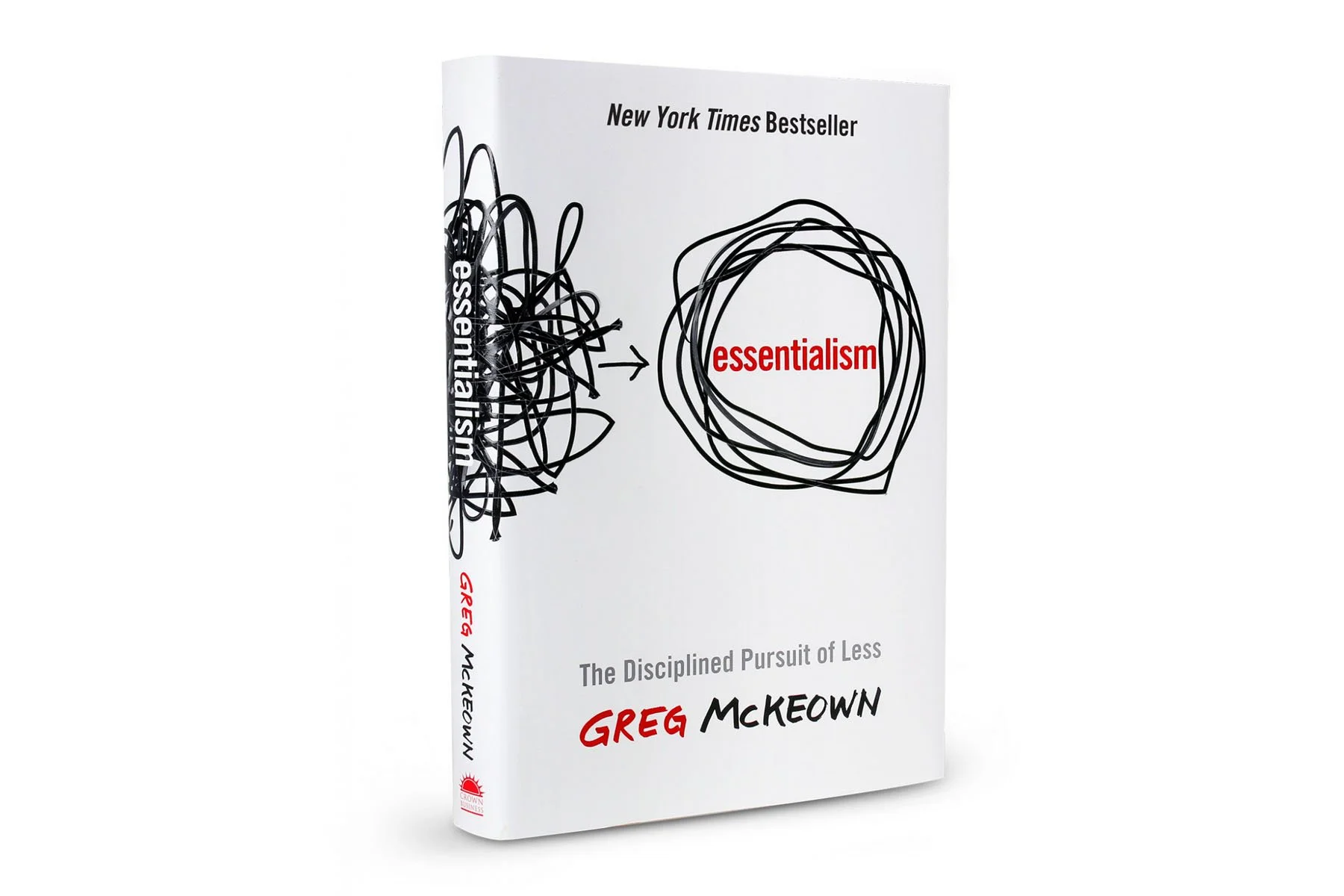
In his bestselling book Essentialism, Greg McKeown argues that the biggest barrier to success isn’t a lack of ideas, it’s the temptation to chase too many. Essentialism teaches that high performers don’t ask, “How can I do everything?”
They ask, “What is the one thing worth doing exceptionally well?”
Behavioral economists call this opportunity cost: the truth that every “yes” you give to one idea is automatically a “no” to something else. And when you say yes to too many things, you quietly say no to the work that could actually change your life.
Research shows that people who learn to identify the single idea with the highest return are far more likely to build meaningful, scalable success.
Heather was practicing Essentialism long before she ever knew the word existed.
While creativity swirled around her through Rachel’s constant stream of concepts, Heather wasn’t drawn to variety. She was filtering for simplicity, universality, and scalability. The rare idea that could grow with them rather than drain them.
Her strength wasn’t in having the best idea.
It was in recognizing the right idea.
Instead of investing energy in ten possible futures, she chose the single idea with the greatest potential and went all-in.
the application
We all reach moments when possibility feels exciting, until it becomes overwhelming. Too many ideas, too many directions, too many “maybes.” And suddenly, nothing moves.
Heather’s story reminds us: people don’t stay stuck because they lack ideas. They stay stuck because they haven’t chosen the right one to commit to.
For educators, this means choosing initiatives that actually help students grow.
For supporters, it’s investing in work that aligns with long-term impact.
For students and creators, it’s realizing you don’t need a dozen ideas, you need one you can focus on deeply.
You don’t need to start big.
You don’t need perfect timing.
You don’t need certainty.
You need clarity — and the courage to choose one idea worth your effort.
Because when you focus your energy, momentum builds.
And when momentum builds, growth finally has space to happen.
What We Can Steal
Choose the idea with exponential upside.
Look for the one idea that can grow bigger than your effort. The one that scales, compounds, and creates real leverage.Say no more often.
Protecting your focus is just as important as choosing the right direction.Go deep, not wide.
Mastery and momentum come from fully committing to one path, not sampling ten.Start small, then scale.
One well-executed idea can open doors that a dozen halfway ideas never will.
Mahalo for reading this week’s Mana‘o Bomb.
Next week, we’ll drop another idea from Hawai‘i. A story that sparks growth, resilience, and purpose.
Keep rising. Keep learning.